
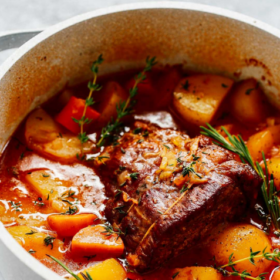
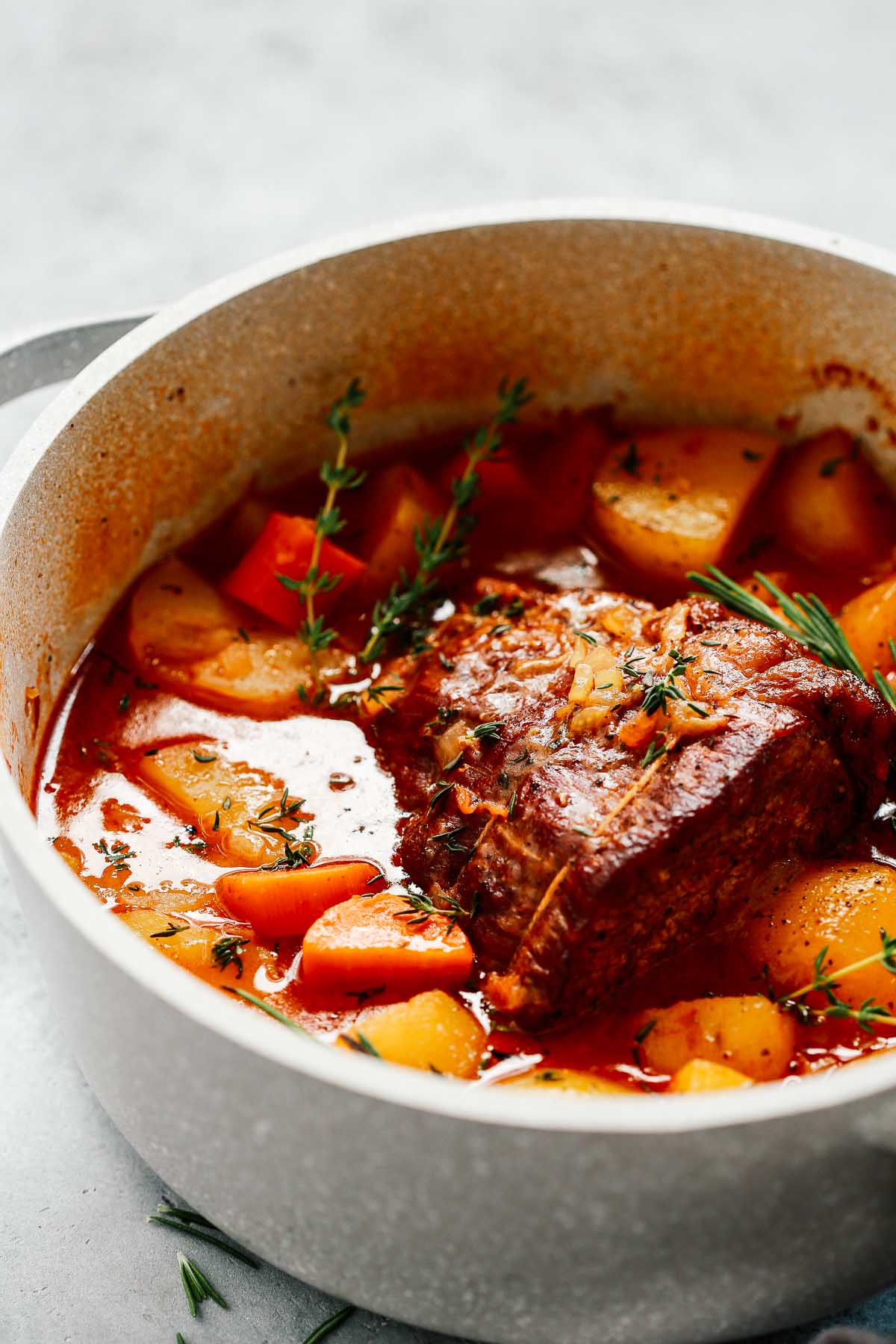
Beef pot roast recipe, made the classic way. I sear a well marbled chuck roast until it has a deep, caramelized crust, then let it braise low and slow in one pot with potatoes, carrots, red wine and fresh herbs until it is fork tender. It takes about four hours in the oven, but only fifteen minutes of hands on prep, and the pot does the rest of the work for you.
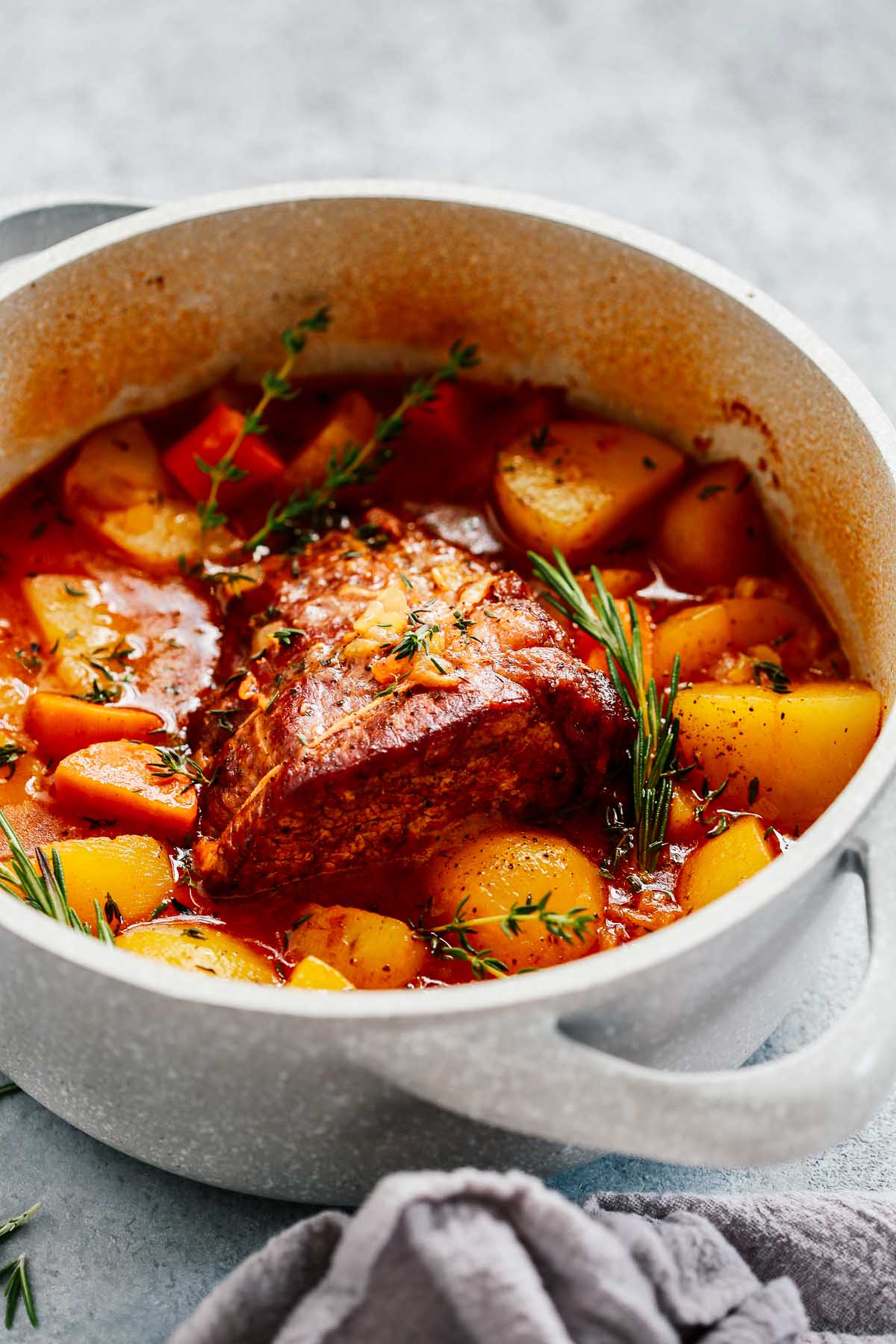


A Slow Sunday, a Big Pot, and No Complicated Steps
My family loves pot roast recipes. Even though I grew up in Brazil, my mom always made our Brazilian version of pot roast called “cozido brasileiro”, and it used to be one of my favorite dishes she made. Pierre also grew up eating pot roast in Montreal, so when I make this one, it feels like it belongs to both sides of our family. Thomas goes straight for the potatoes before he even touches the meat, every single time.
What I like most about this recipe is how little there is to fuss over. There is no flour, no canned soup, and no extra pan to wash. The beef and the vegetables cook together in the same pot, and the liquid left behind does double duty as the sauce.
This is my go to Sunday dinner once the weather turns, and it is easy enough that I make it for a small holiday gathering too, when I do not want to be tied to the stove all afternoon.
If you end up with extra beef, do not skip my Leftover Shredded Roast Beef Pasta. It is one of my favorite ways to use it up the next day.
Essential Ingredients for This Beef Pot Roast
All ingredients and their amounts are listed in the recipe card at the bottom of this post.
Boneless Beef Chuck Roast: This is the best cut of beef and the only cut I use for pot roast. Chuck comes from the shoulder, which is a hard working muscle, so it starts out tough. That is exactly why it works here. Four hours of low, slow braising breaks down the connective tissue until the meat is fork tender and pulls apart on its own. I always look for a roast that is well marbled with fat running through it, not just a layer on top.
Pro Tip: Do not trim off the fat before searing. It renders down during the long cook and keeps the meat from drying out.
Dry Red Wine: I use a red wine like Cabernet Sauvignon or Merlot to deglaze the pot after searing, which lifts up all the browned bits stuck to the bottom. Those bits are where a lot of the flavor in this dish comes from. I let the wine simmer down by half before adding the broth, which cooks off the sharp alcohol taste and leaves behind something deep and savory. I have tested this with balsamic vinegar in place of the wine, and it works well if you prefer to skip alcohol, though the sauce ends up a touch more tangy and a little less rounded in flavor.
Beef Broth: I always reach for low sodium broth so I can control the seasoning myself instead of the sauce turning out too salty by the time it reduces. If your broth is regular sodium, I recommend holding back on the added salt until the roast comes out of the oven.
Yukon Gold Potatoes: I like Yukon Golds here because they hold their shape through a long braise instead of turning to mush, while still coming out creamy inside. I cut mine into two inch pieces so they finish cooking at roughly the same time as the beef. Russet potatoes or baby potatoes work in a pinch, but I have found they break down faster and can turn the braising liquid a little cloudy.
Carrots: I cut these on the diagonal into two inch pieces so they cook evenly next to the potatoes. If your carrots are especially thick, cut them a little smaller so they are fork tender by the time the beef is done.
Instructions to Make Beef Pot Roast Beef
A quick note before you start: preheat your oven to 325°F while you prep and sear the beef, so it is fully heated by the time the pot goes in. You will need a Dutch oven or any other heavy, oven safe pot with a tight fitting lid.
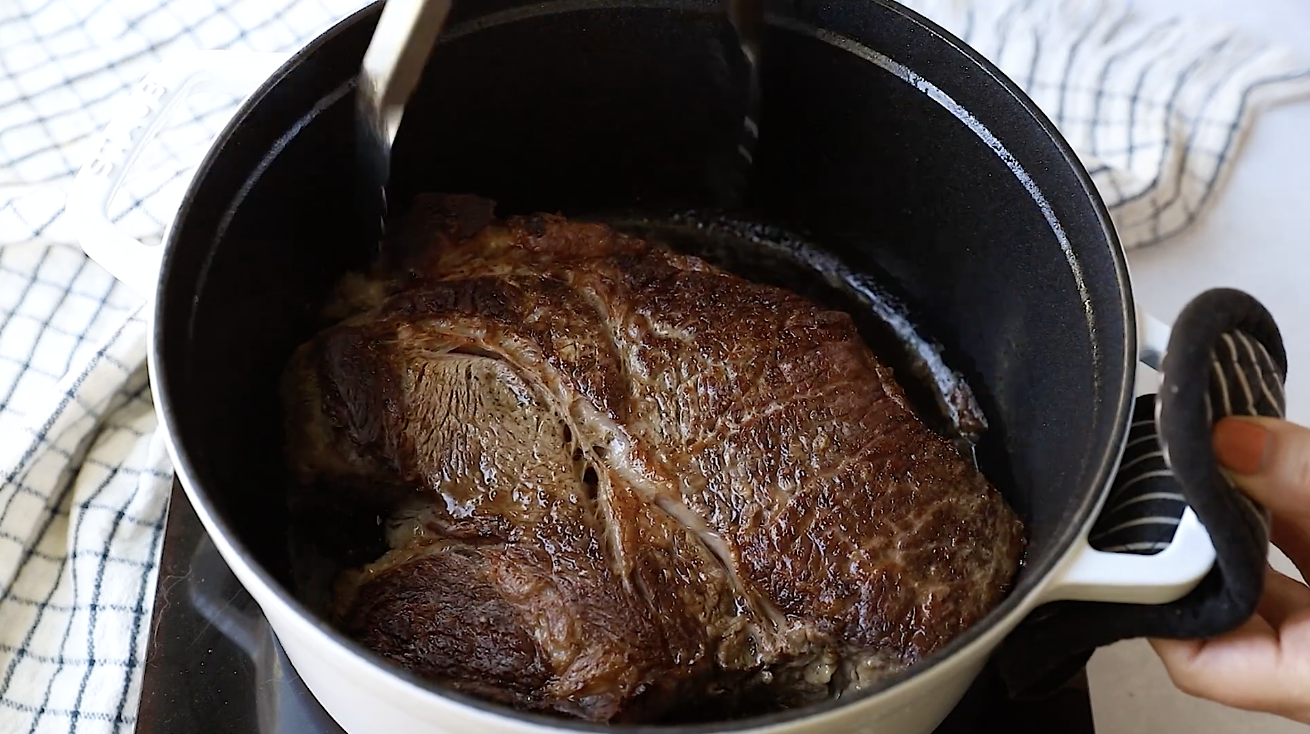
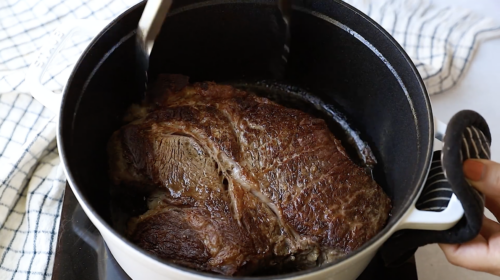
1. Season and sear the beef. Heat the olive oil and butter in your Dutch oven over medium high heat. Season the chuck roast all over with salt and pepper, then sear beef on all sides for about 15 minutes total. I know that sounds long for searing, but I have tested this at shorter times and the crust matters. A deep, dark sear is where most of the flavor in this dish starts. Set the beef aside once it is browned.
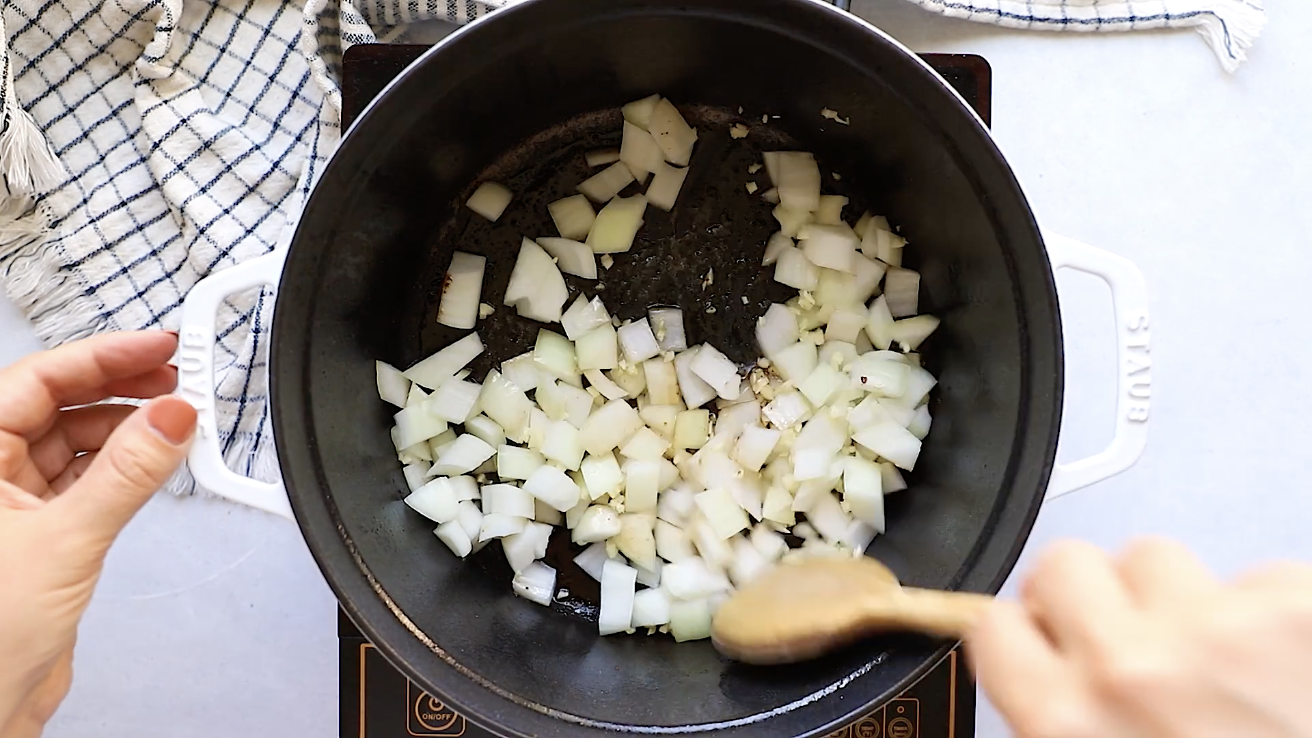
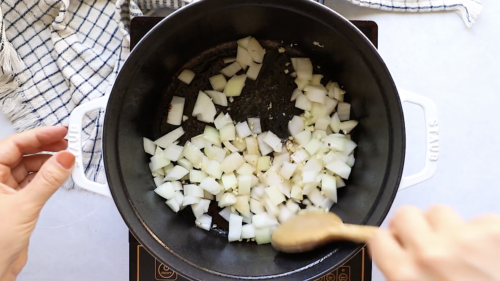
2. Cook the onion and garlic. Add the onion and garlic to the same pot and cook for 2 to 3 minutes, stirring occasionally, until the onion turns translucent. This builds the base of flavor the rest of the dish sits on top of.
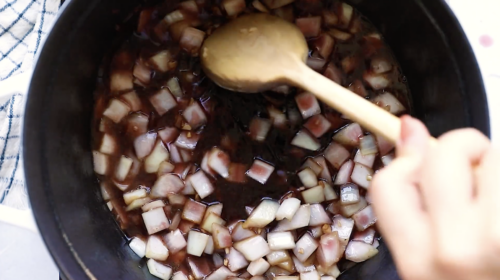
3. Deglaze with the wine. Pour in the wine and use a wooden spoon to scrape up the browned bits stuck to the bottom of the pot. Let it simmer until it reduces by half. This step is not optional in my book. Those browned bits hold a lot of the flavor from searing the beef, and simmering the wine down mellows out the alcohol taste so it does not carry through to the final dish.
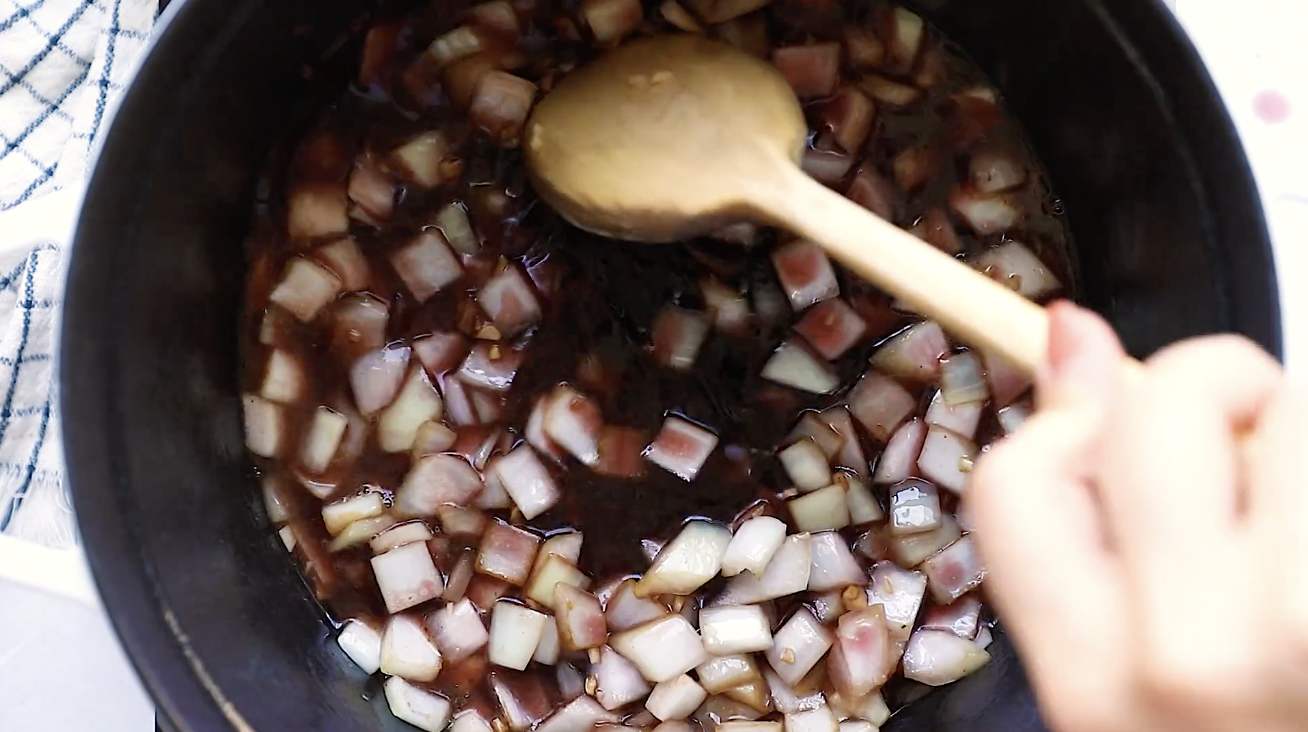
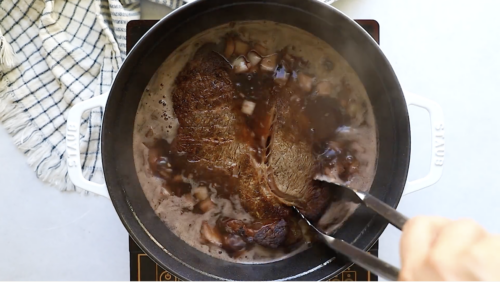
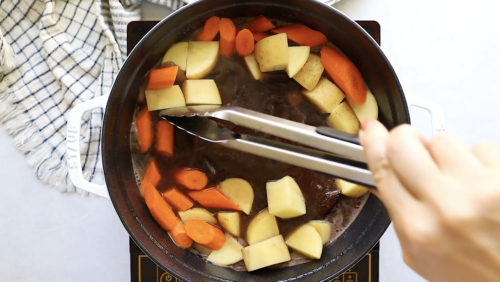
4. Add the broth and return the beef. Pour in the beef broth and bring it to a boil, then nestle the beef back into the pot along with the potatoes, carrots, rosemary, thyme, and bay leaves. I add the vegetables in with the beef from the start rather than halfway through. I have tested it both ways, and giving the vegetables the full four hours in the braising liquid gives them more time to soak up flavor, without turning to mush, since Yukon Golds hold their shape well.
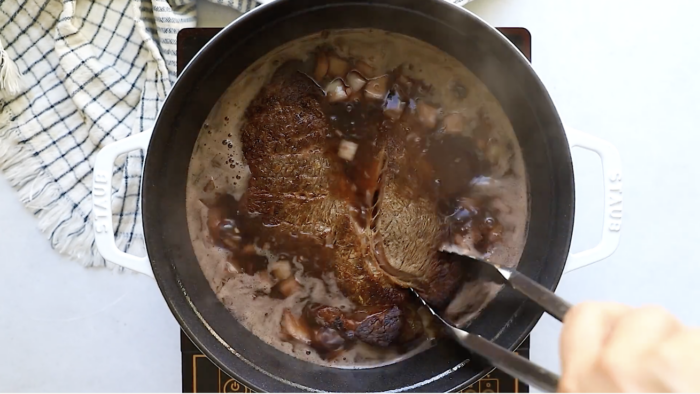
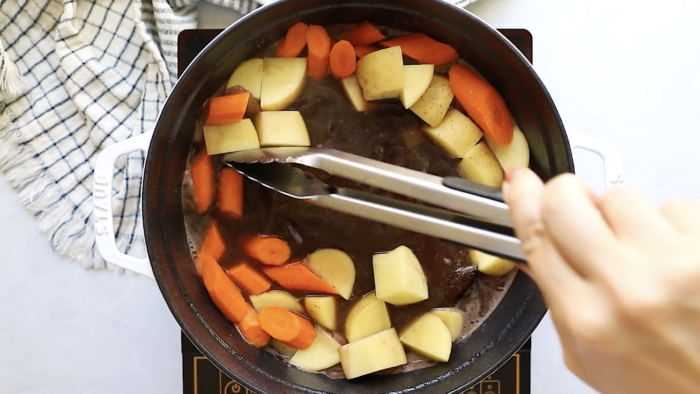
5. Cover and braise. Put the lid on the pot and transfer it to the oven. A tight fitting lid matters here, since covering the pot traps moisture that keeps the beef from drying out over such a long cook. If your pot does not have a lid, tent it tightly with foil instead. Roast for about 4 hours.
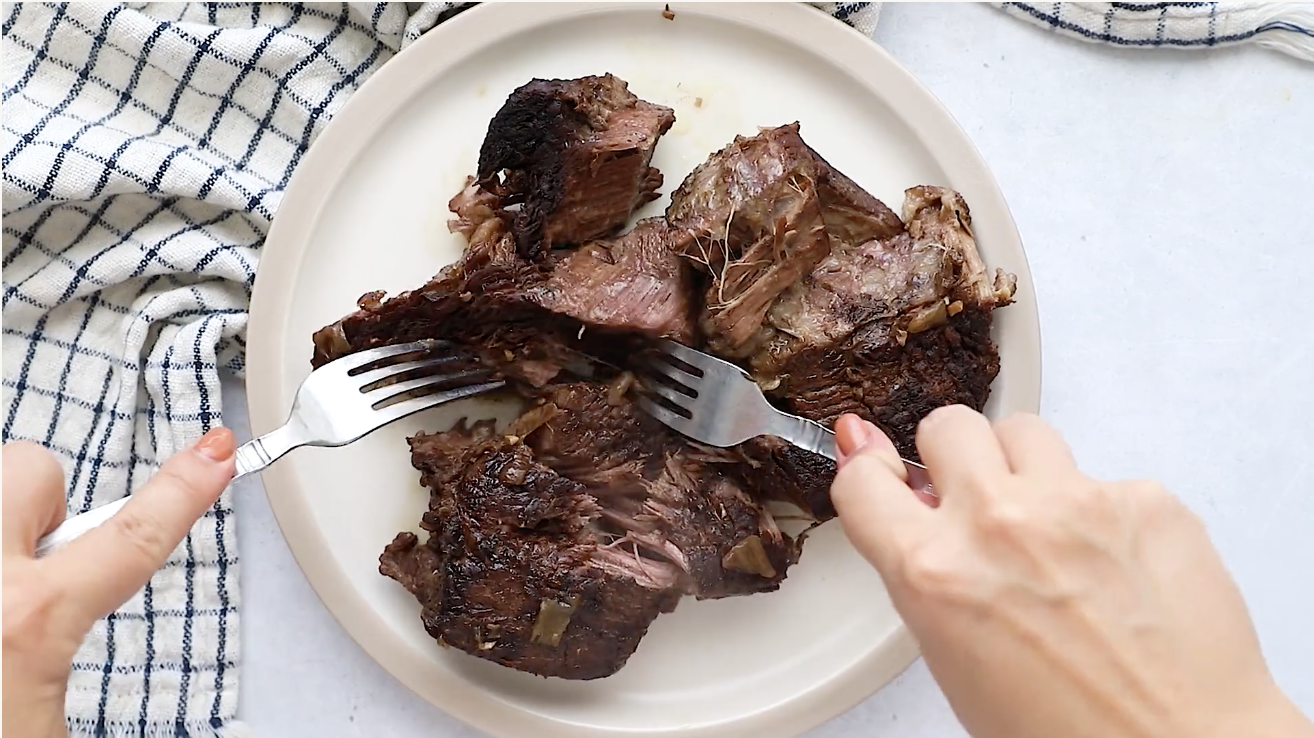
6. Check for doneness. You will know the beef is ready when it is fork tender, meaning a fork slides in and twists the meat apart with almost no resistance. If it still feels firm at the 4 hour mark, give it another 20 to 30 minutes. Undercooked chuck is tough, not tender, so it is worth the extra time.
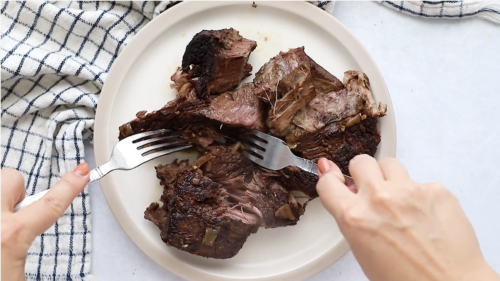
7. Rest, then shred. Discard the rosemary and thyme stems and the bay leaves. Move the vegetables to a platter, then use two forks to shred the beef or pull it into large chunks. Place the beef on the same platter, spoon some of the cooking liquid over the top, and serve warm.
Olivia’s Recipe Tips
Turn the extra liquid into gravy if you want one. I usually serve this with the liquid poured straight over the meat, no thickening needed. If you want a thicker gravy, strain the liquid, bring it to a simmer on the stove, and whisk in a slurry of one tablespoon cornstarch mixed with one tablespoon cold water. Simmer for a minute or two until it coats a spoon.
Use the fork test, not a thermometer. A pot roast is not done at a specific internal temperature the way a steak is. It is done when it is fork tender. I have pulled roasts that hit 200°F on a thermometer but were still a little tough, simply because they needed more time for the connective tissue to break down.

Beef Pot Roast Recipe
Video
Ingredients
- 1 tbsp olive oil
- 1 tbsp butter
- 4 1/2 pound boneless beef chuck roast
- 1 tsp salt
- 1/2 tsp black pepper
- 1 large sweet onion chopped
- 5 garlic cloves minced
- 1 cup dry red wine
- 3 cups beef broth low sodium
- 1 pound potatoes peeled and cut into 2-inch pieces Yukon Gold
- 4 large carrots peeled and cut on the diagonal into 2-inch pieces
- 3 sprigs fresh rosemary
- 3 sprigs fresh thyme
- 2 dried bay leaves
Instructions
- Preheat the oven to 325°F. In a Dutch oven or an oven-safe pot, add olive oil and butter over medium-high heat. While the butter is melting in the pot, season the beef all over with the salt and pepper.
- Place it in the Dutch oven and sear all the sides of it for about 15 minutes. Set aside.

- In the same Dutch oven, add the onions and garlic and cook for about 2-3 minutes or until onions are translucent. Don’t forget to stir occasionally.

- Add the wine and bring to a simmer. Using a wooden spoon, scrap up the brown bits on the bottom of the pot. Let the wine simmer until it reduces to half.
- Add the beef stock and bring to boil. Return the beef to the pot.

- Then, add potatoes, carrots, rosemary, thyme and bay leaves. Cover the pot with a lid and bring to the oven. Roast for about 4 hours or until the beef is super tender.
- Discard the rosemary, thyme springs and bay leaves from the pot and place the veggies on a platter. Using 2 forks, shred the beef or pull it into chunks.
- Place the beef on the same platter you add the veggies, pour a little bit of the cooking liquid on top of the beef and serve warm. Enjoy!
Notes
Nutrition
Nutrition information is automatically calculated, so should only be used as an approximation.
Did You Make This?
Follow @primaverakitchen on Instagram, snap a photo, and tag it #primaverakitchen. We’d love to see your recreation.










Is it possible for you to include using dry/bought spices when fresh are not available like rosemary, thyme etc. and what amounts to use if using the dry spices?
You can use dried spices. They should be the half amount of the fresh herbs.