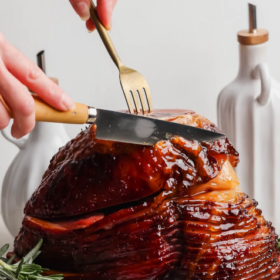
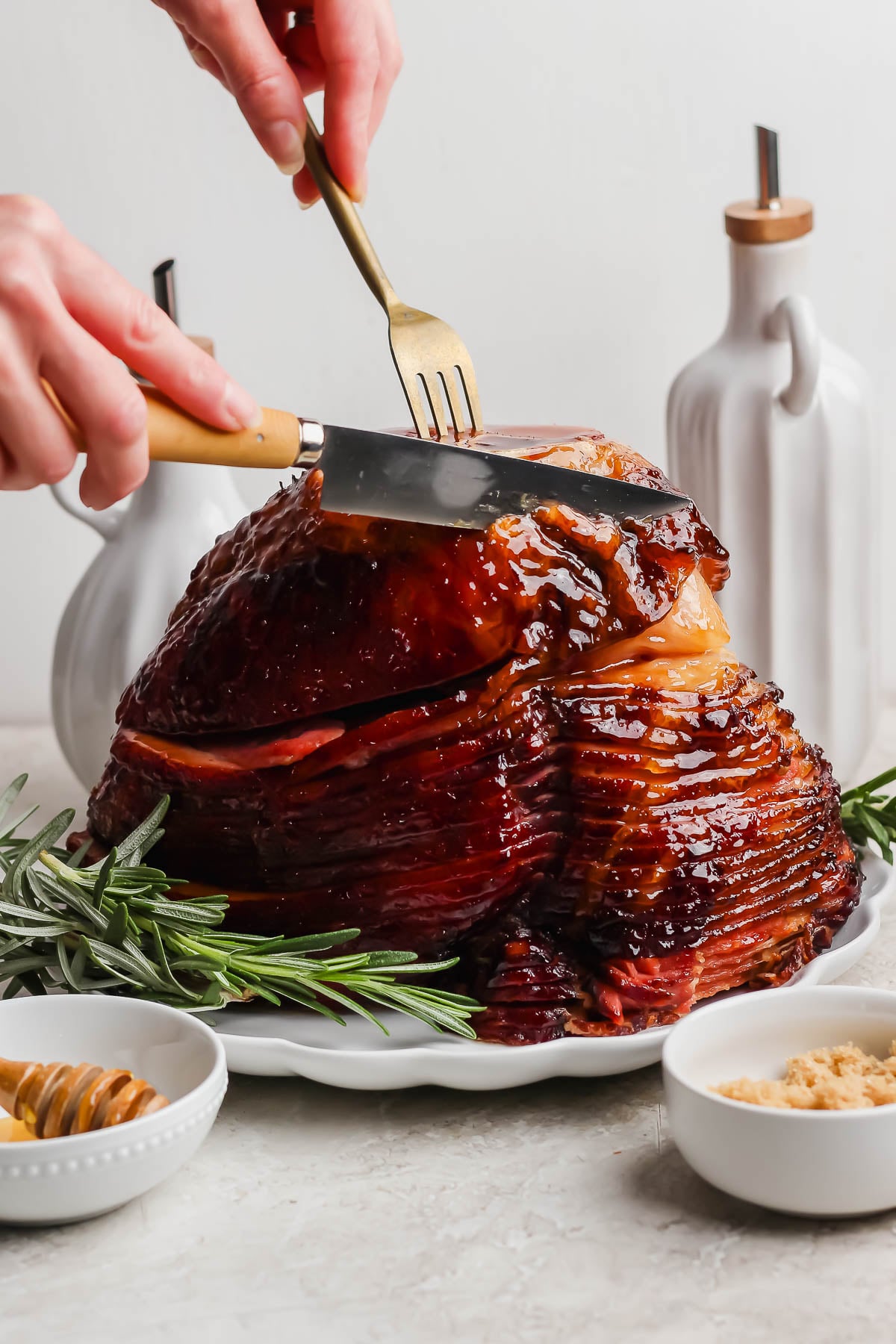
This honey brown sugar glazed ham is the juicy, glossy holiday centrepiece that tastes like you fussed all day, but it is really just a spiral cut ham, five pantry ingredients, and your oven doing the work. The ham warms low and slow at 250°F so the slices never dry out, then gets brushed with a thick honey, brown sugar, and Dijon glaze that clings to every slice. It needs about 15 minutes of hands on time and is ready in about 2½ to 3 hours, perfect for Christmas, Easter, or any Sunday dinner when you are feeding a crowd.


Low, Slow, and Never Dry
Ham was never part of Christmas when I was growing up in Brazil. It just isn’t something we eat there. But I fell in love with ham after moving to Canada, so when my family came from Brazil to spend the holidays with us and I hosted my very first Christmas here in Toronto, I knew exactly what I wanted to put in the middle of the table. I wanted to show them this traditional North American main dish, and I wanted to get it right. We all loved it.
What I love most is how little you actually do. The ham is already cooked, so you are really just warming it gently and building a glaze. That leaves your oven and your hands free for the sides. I almost always serve it with my Creamy Mashed Potatoes, because the pan juices and leftover glaze are wonderful spooned over them.
For something green, my Maple Bacon Brussels Sprouts bring a little smoky crunch that balances the sweet glaze, and they roast in the 20 minutes the ham rests.
Key Ingredients:
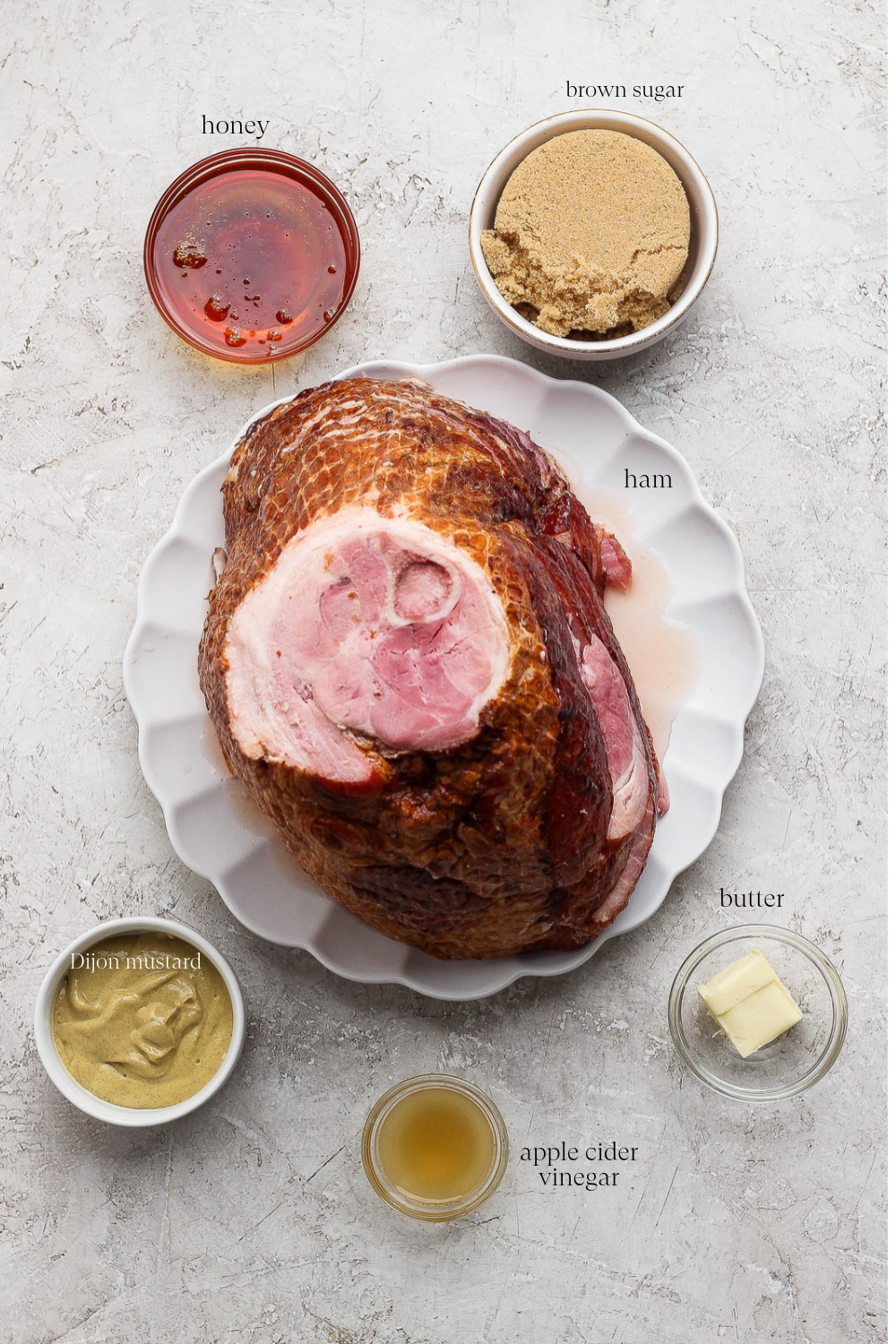
All ingredients and their amounts are listed in the recipe card at the bottom of this post.
Bone In Spiral Cut Ham: I use an 8 to 10 pound fully cooked, bone in, spiral cut half ham. The bone adds flavour and helps the meat hold on to its moisture, and the spiral slices let the glaze get in between every piece. Read the label before you buy. Plain “ham” has the least added water, while “ham with natural juices” and “ham, water added” have more. I recommend the plain “ham” label for this recipe. Hams with added water turn spongy in the oven and release so much liquid that the glaze slides into the pan instead of sticking to the slices. A ham this size feeds 12 to 16 people, about ½ to ¾ pound per person, with plenty left over for sandwiches.
Light Brown Sugar: Brown sugar is what gives this glaze its deep caramel colour and that sticky lacquer on the outside of the ham. I use light brown sugar because it lets the honey flavour come through. Dark brown sugar works too, but the molasses notes are stronger and the glaze turns darker faster, so keep a closer eye on it while it simmers. Pack it firmly into the measuring cup, since a loose cup of brown sugar makes a thinner glaze.
Honey: Honey brings a floral sweetness that brown sugar alone does not have, and it is what makes the glaze glossy. I like a mild, liquid clover or wildflower honey here. A strong, dark honey like buckwheat will overpower the ham. If your honey has crystallized, it melts right back into the glaze as it simmers, so no need to warm it first.
Dijon Mustard: This is the ingredient that makes the glaze taste balanced instead of just sweet. The sharpness of Dijon cuts through the sugar and the saltiness of the ham. I recommend smooth Dijon rather than yellow mustard, which tastes flat here. Grainy Dijon also works and gives the glaze little flecks you can see on the slices.
Pro Tip: Throw away the glaze packet that comes with the ham. It is mostly sugar and dried flavourings, and it cannot give you the thick, glossy coating you get from simmering real honey, brown sugar, and Dijon together on the stove.
How to Make Honey Brown Sugar Ham Glaze:
Before you start: Take the ham out of the fridge about 1 hour before baking so it is not ice cold in the centre. Heat the oven to 250°F (120°C) and set a rack in the lower third so the ham sits in the middle of the oven. You will need an instant read thermometer for this recipe. It is the only reliable way to know when the ham is ready.
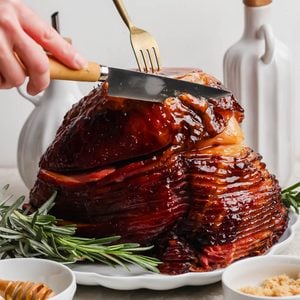
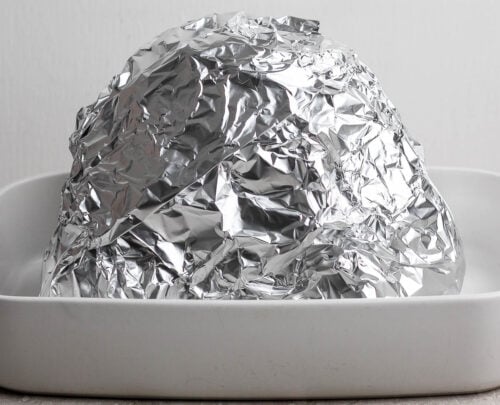
Wrap the ham. I line a roasting pan or a 9×13 inch baking dish with two long sheets of aluminum foil, long enough to fold up and over the ham. I take the ham out of its packaging and set it in the pan cut side down. This matters more than you would think. With the flat face against the pan, the slices stay pressed together and the exposed meat is protected, so it cannot dry out. Then I fold the foil up and around the ham and seal it tightly. If you prefer, you can skip the foil and use an oven bag instead. Place the ham in the bag cut side down, seal it, and trim off the extra plastic so it does not touch the oven walls. Both methods trap the steam the ham releases, which is exactly what keeps it juicy.
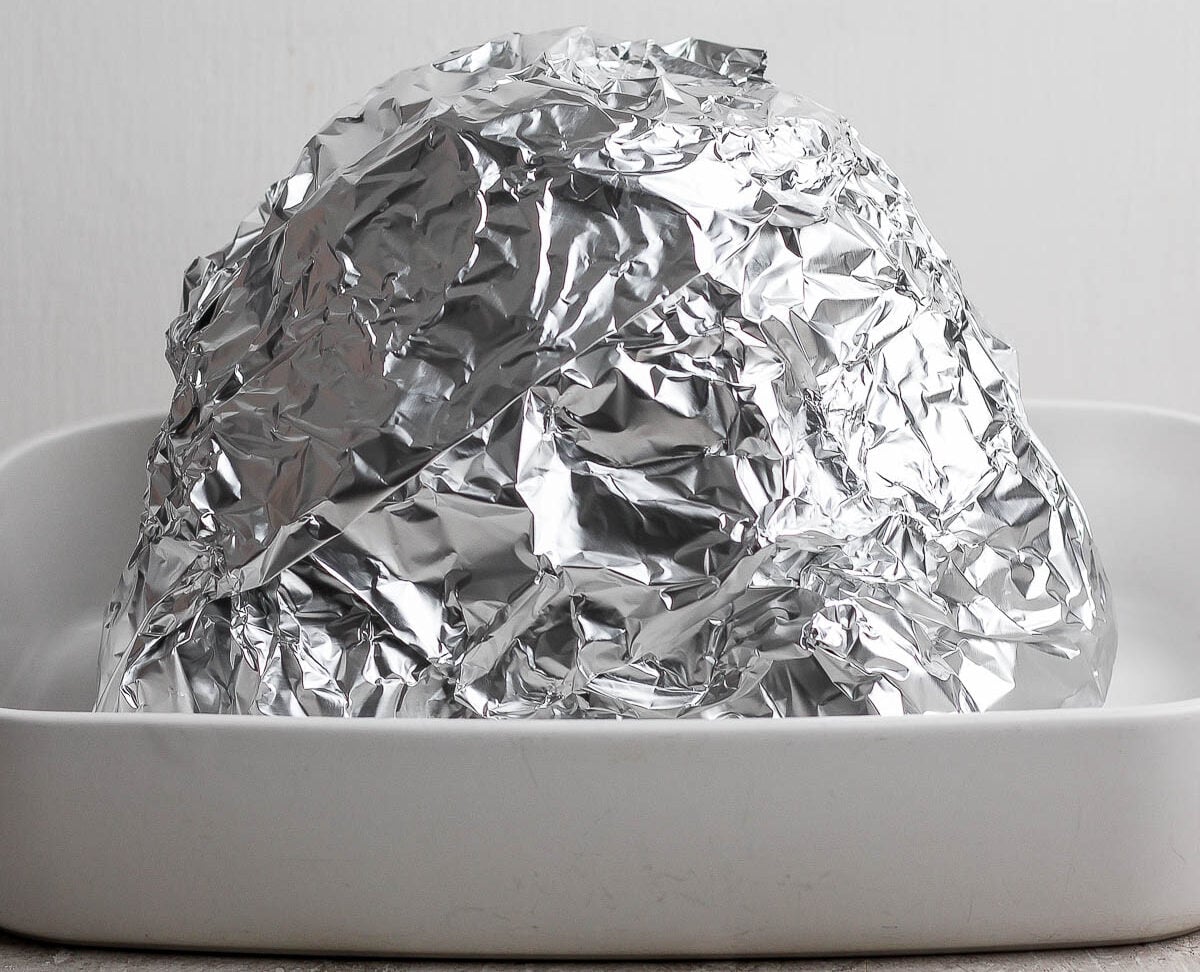
Bake low and slow. I bake the wrapped ham until an instant read thermometer inserted into the thickest part, not touching the bone, reads about 120°F (49°C). Start checking after 1½ hours. An 8 pound ham usually gets there in 2 to 2½ hours, and a larger ham can take closer to 3 hours. The low temperature is the whole secret here. At 325°F, the outer slices heat much faster than the centre, and by the time the middle is warm, the edges are dry and curled. At 250°F, the heat moves through gently and evenly, so every slice stays tender.
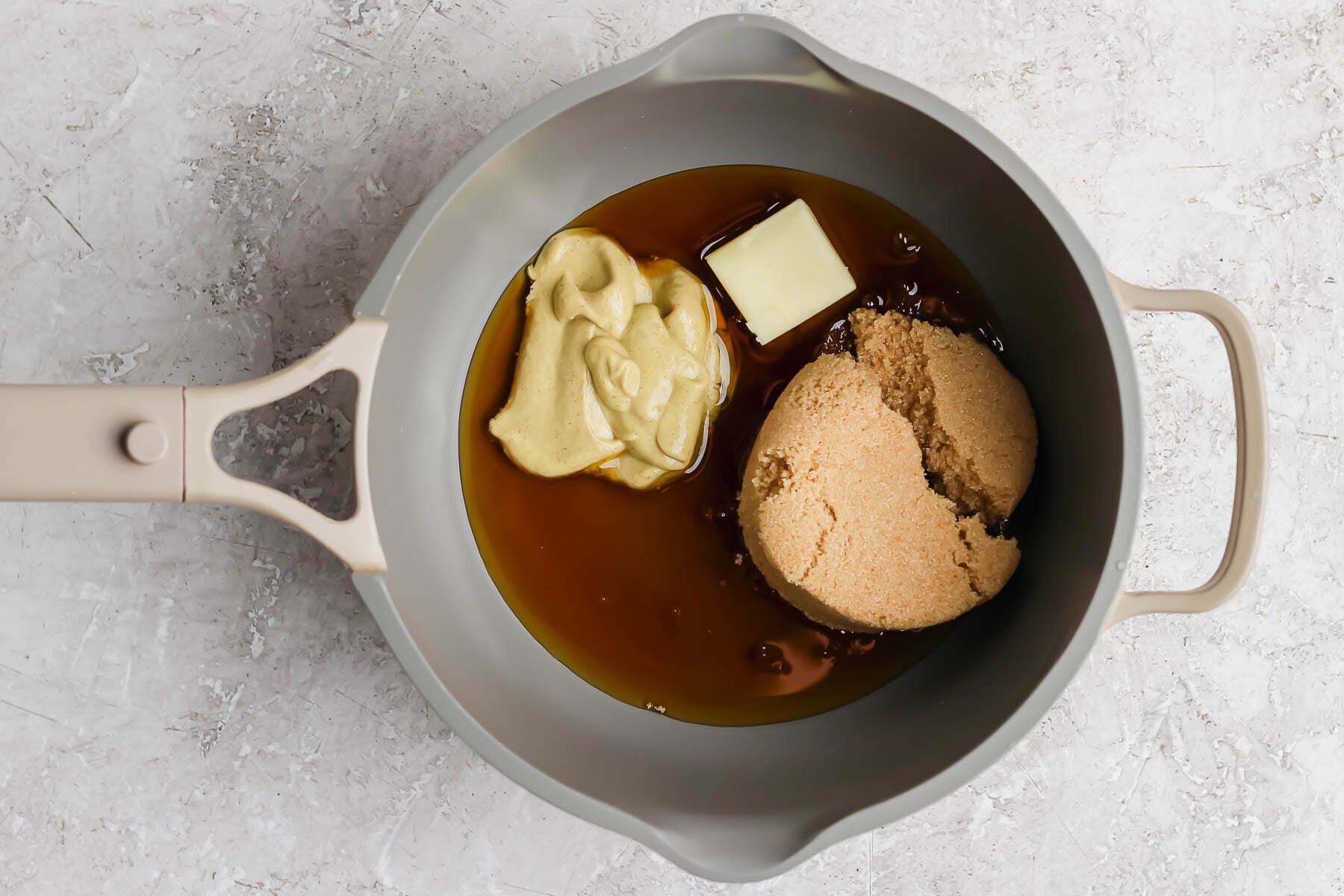
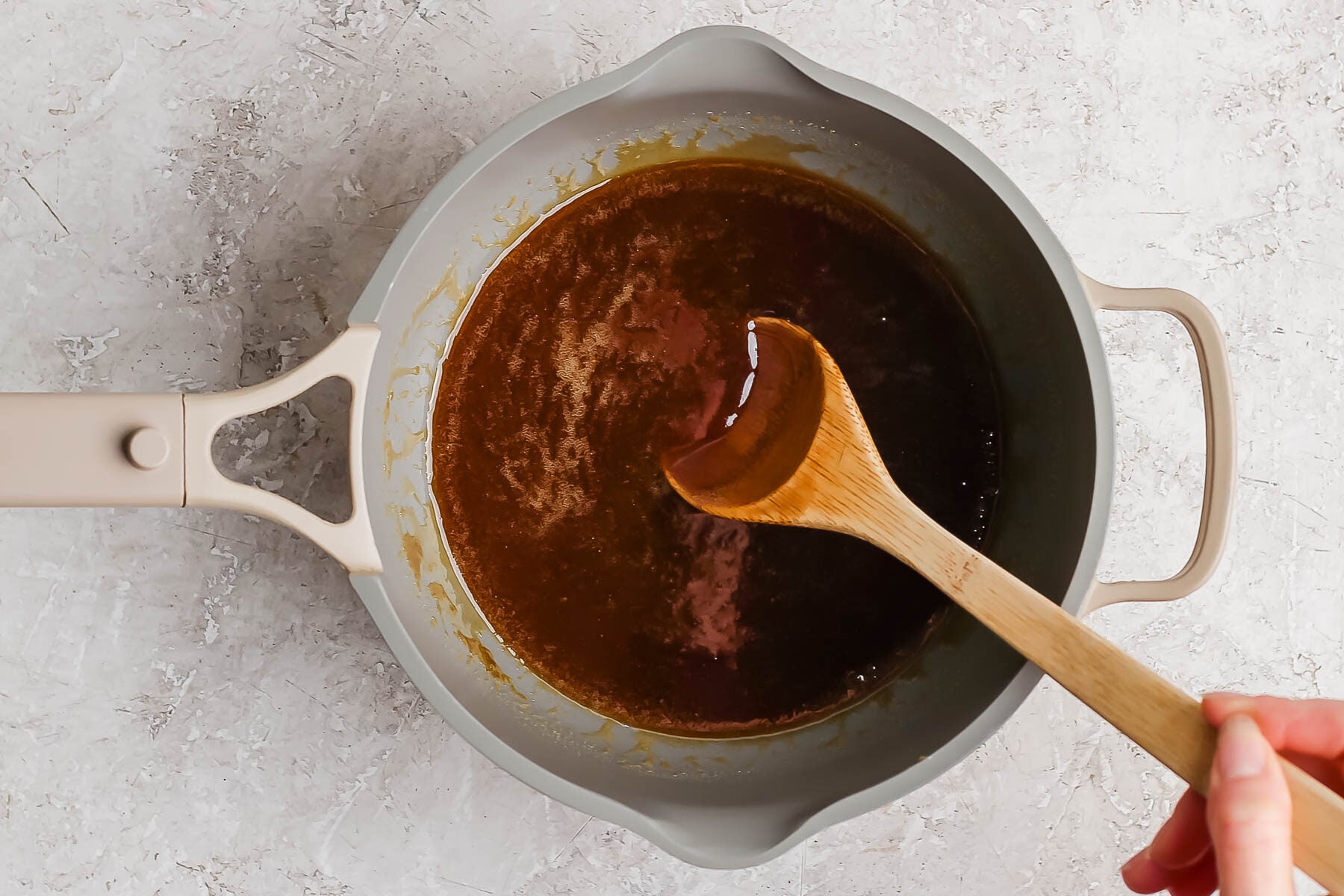
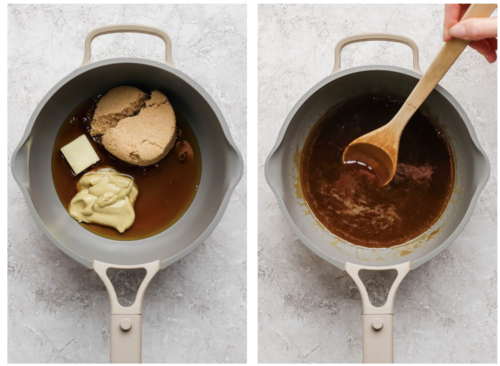
Make the glaze while the ham bakes. I add the brown sugar, honey, Dijon, butter, and vinegar to a medium saucepan over medium high heat and bring it to a simmer, stirring often to break up any lumps of brown sugar. Then I lower the heat to medium low and let it simmer gently for 10 to 15 minutes, until it turns a shade darker and thickens. A lot of recipes stop as soon as the sugar melts, but a thin glaze just runs off the ham and pools in the pan. Simmering it longer reduces it into a syrupy glaze that coats a spoon and actually stays on the slices. Remove it from the heat. It will keep thickening as it cools slightly.
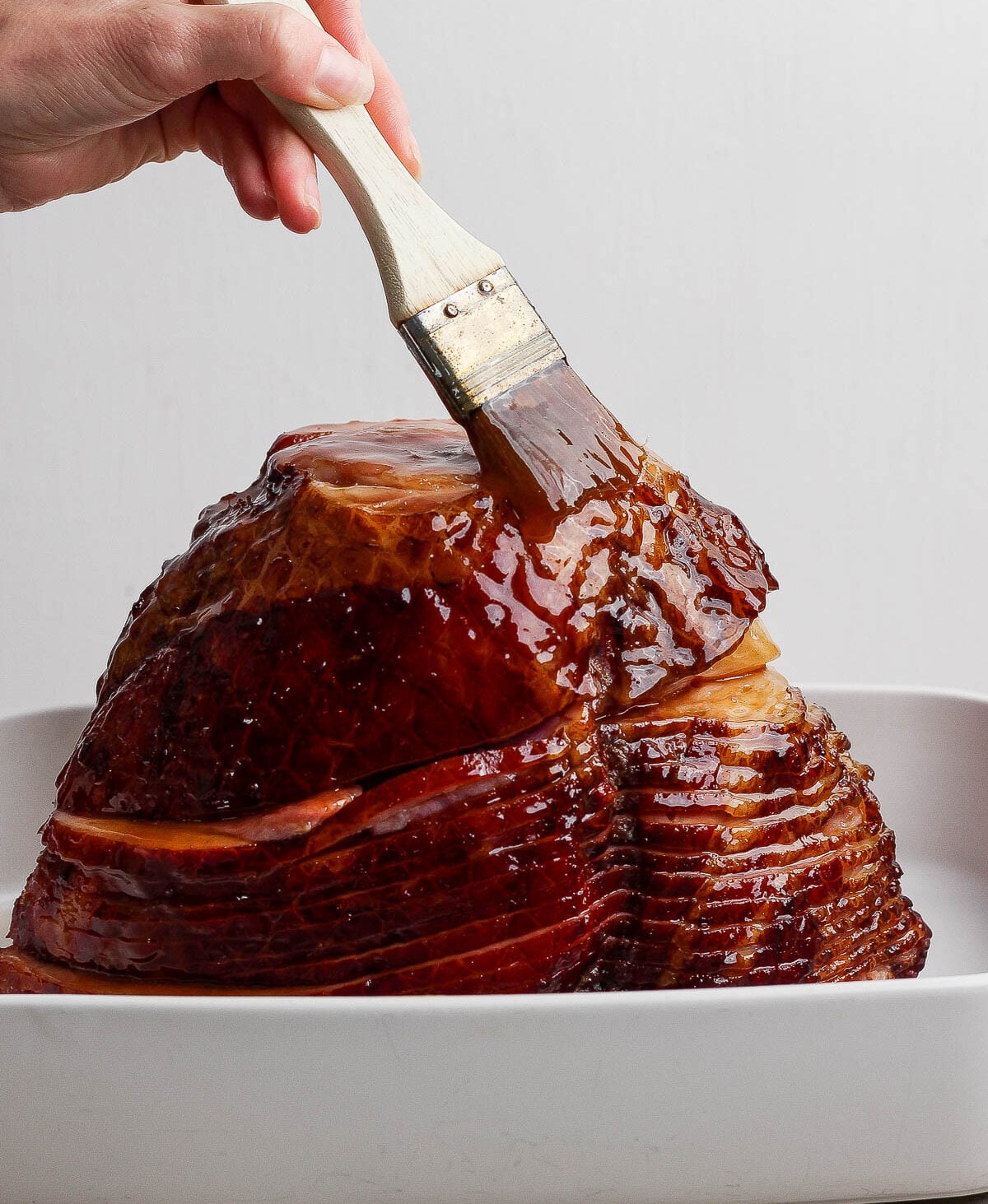
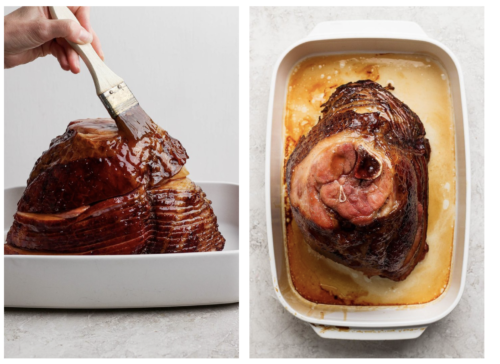
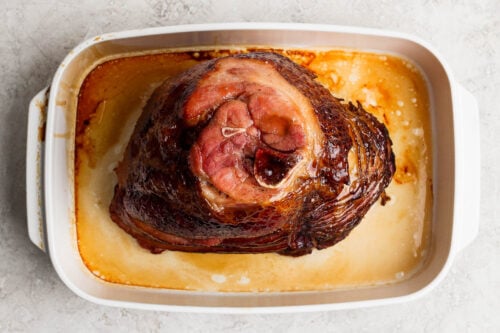
Finish uncovered until glossy. I return the ham to the oven, uncovered, for about 30 minutes, until the glaze is set and sticky and the centre reads 140°F (60°C). With the wrapping off, the glaze has a chance to caramelize on the surface. If you have glaze left over, brush on a second coat halfway through for an even shinier finish.
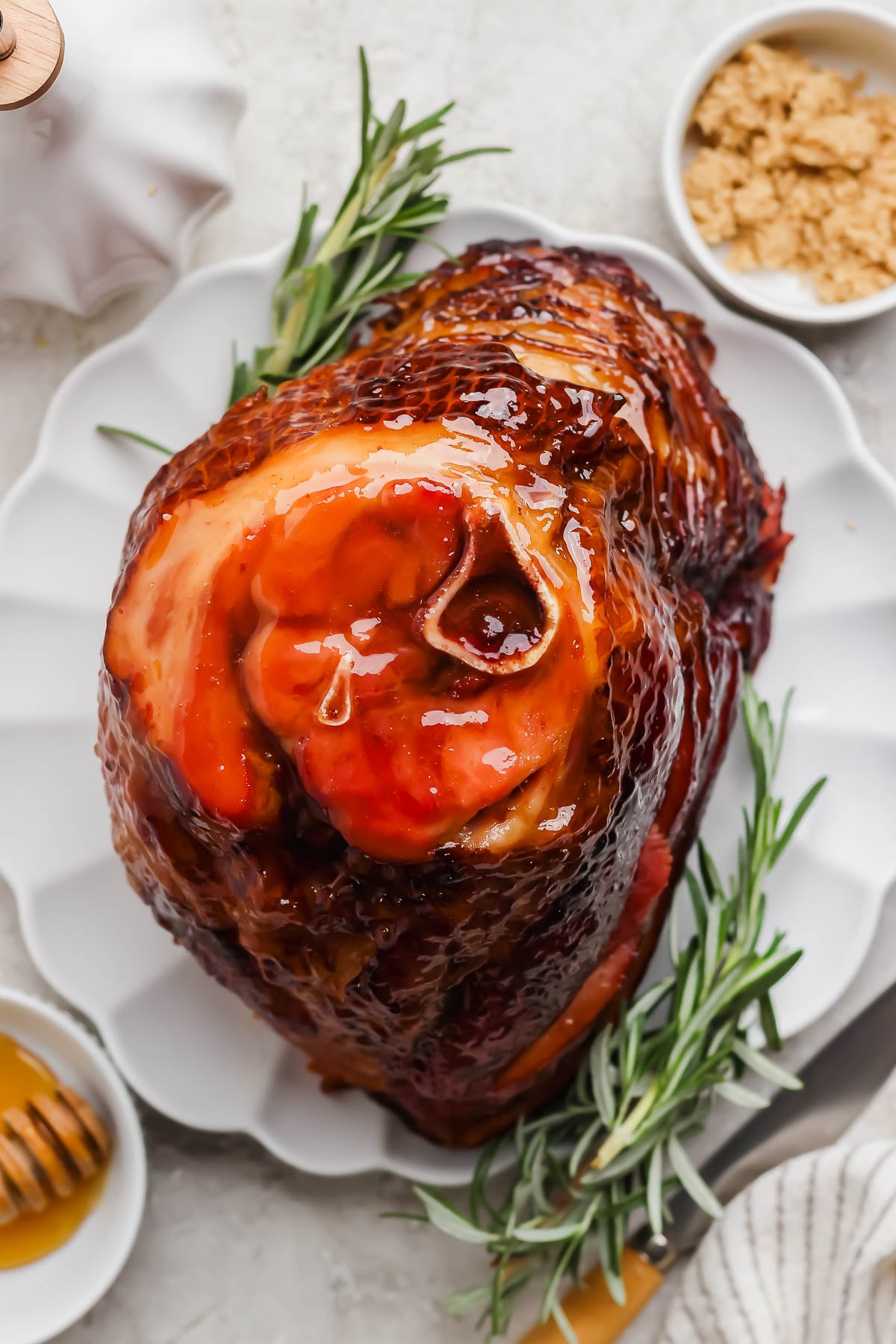
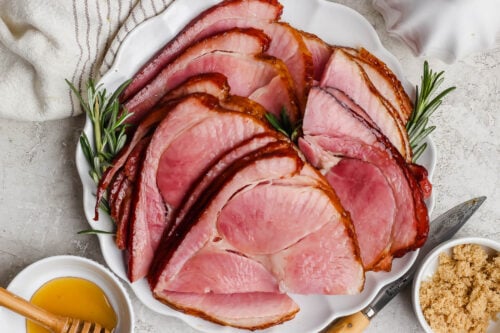
Rest and carve. I let the ham rest for 5 to 10 minutes so the juices settle back into the meat. To serve, I use a long, thin knife to cut around the bone, then cut along the natural seams of the ham. The spiral slices fall away on their own. Spoon some of the pan juices over the platter before serving. They are salty, sweet, and full of flavour.
Olivia’s Recipe Tips
If the edges darken too fast, tent them. Sugar can scorch at the thin tips of the slices during the uncovered finish. If you see any spots getting too dark, lay a small piece of foil loosely over just those areas and keep going.
Want a deeper caramelized crust? For the last 5 minutes, turn the oven up to 425°F and watch it closely. The glaze bubbles and darkens quickly, so do not walk away.
Loosen a glaze that got too thick. If your glaze sits for a while and turns stiff, warm it over low heat with a teaspoon of water or vinegar until it is brushable again.
Save the bone. After the holidays, I freeze the ham bone and use it to flavour a big pot of split pea or bean soup. It is one of my favourite parts of making a whole ham.
What to Do with Leftover Ham
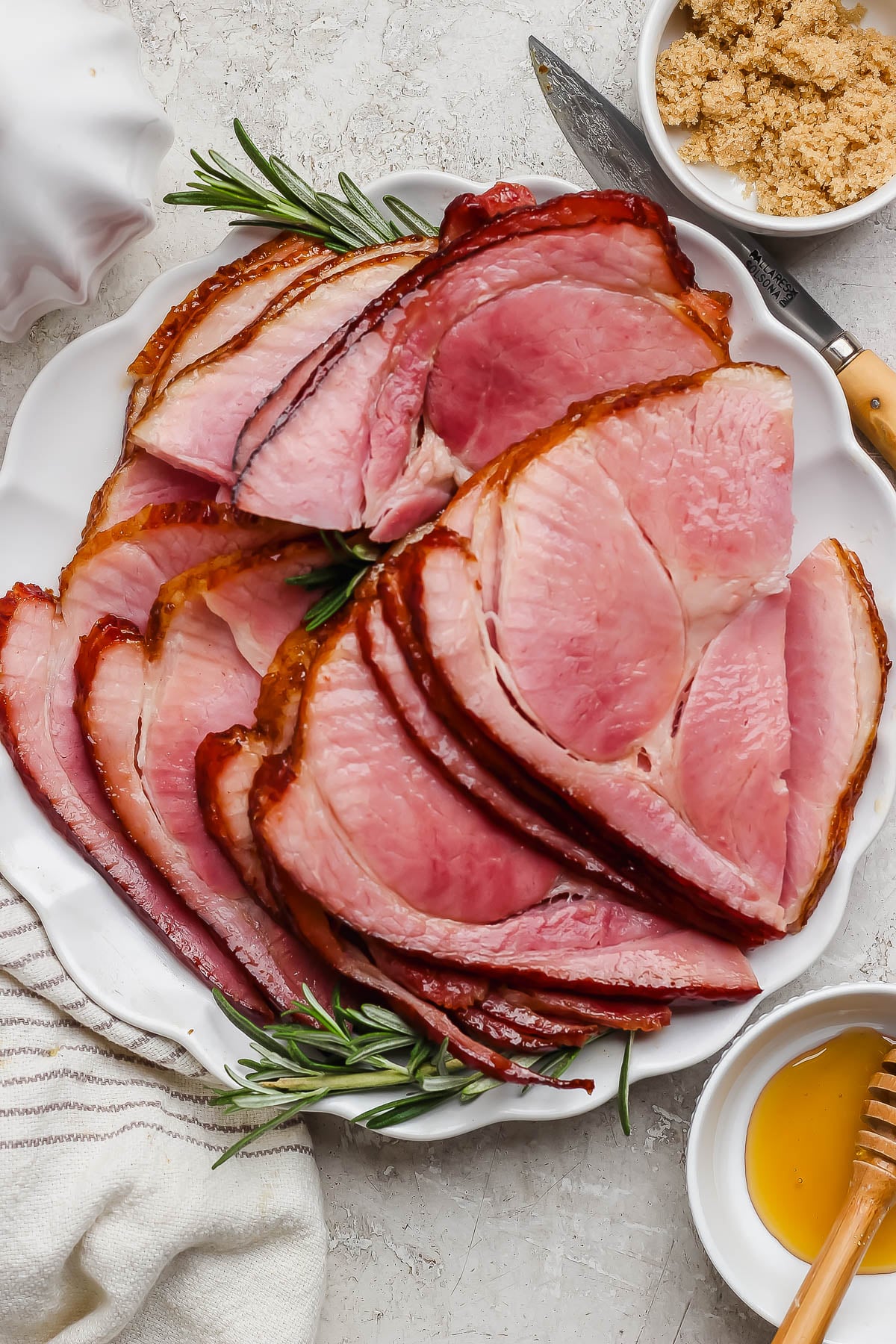
Leftovers are half the reason I make a whole ham. Thomas loves thick slices tucked into a toasted sandwich with a little extra Dijon the next day. Diced ham is also wonderful in omelettes, fried rice, pasta, and soups. I also love serving cold slices on a holiday board alongside Cranberry Orange Sauce, since the tart cranberries are so good with the sweet, salty glaze.

Honey Brown Sugar Glazed Ham (Juicy Spiral Ham, Never Dry)
Ingredients
- 1 8 to 10 pound bone in, spiral cut ham, with no added water or juices
- 1 cup packed light brown sugar
- ½ cup honey
- ¼ cup Dijon mustard
- 1 tablespoon unsalted butter
- 1 tablespoon apple cider vinegar
Instructions
- Take the ham out of the fridge 1 hour before baking. Set a rack in the lower third of the oven.
- Heat the oven to 250°F (120°C). Line a roasting pan or 9×13 inch baking dish with 2 sheets of aluminum foil, long enough to wrap up and around the ham. Take the ham out of its packaging and set it in the pan cut side down. Fold the foil up and around the ham and seal it well. Or skip the foil, place the ham in an oven bag cut side down, seal the bag, and trim off the extra plastic.

- Bake the ham until an instant read thermometer inserted into the center, not touching the bone, reads 120°F (49°C). Start checking after 1½ hours. An 8 pound ham usually takes 2 to 2½ hours, and a larger ham can take up to 3 hours.
- While the ham bakes, make the glaze. Add the brown sugar, honey, Dijon, butter, and vinegar to a medium saucepan over medium high heat. Bring to a simmer, stirring often to break up any lumps. Reduce the heat to medium low and simmer gently until the glaze is darker and thickened, about 10 to 15 minutes. Remove from the heat.

- When the ham reaches 120°F (49°C), take it out of the oven and unwrap it (or remove it from the bag), setting it directly in the pan. Brush the warm glaze over the ham, working it between the slices wherever you can.

- Return the ham to the oven, uncovered, and bake about 30 minutes more, until the glaze is sticky and the centre reads 140°F (60°C).

- Let the ham rest for 5 to 10 minutes. Use a long, thin knife to cut around the bone, then cut along the natural lines of the ham to separate the slices.
Notes
Nutrition
Nutrition information is automatically calculated, so should only be used as an approximation.
Did You Make This?
Follow @primaverakitchen on Instagram, snap a photo, and tag it #primaverakitchen. We’d love to see your recreation.