This pan seared flank steak gets a deep, buttery crust from a simple rub of softened butter, dry mustard, salt, and pepper, then sears in a hot cast iron skillet in under 10 minutes. It’s a weeknight steak dinner with just five ingredients, no marinade, and no grill. You slice it thin against the grain for tender, juicy strips that go with almost any side.


A Cheap Cut That Eats Like a Steakhouse
In Brazil, the long, grainy cuts like fraldinha are the ones everyone fights over at a churrasco (BBQ in Portuguese). That’s why I’ve never understood the idea that flank steak is a “lesser” steak. It has more beefy flavour than most pricier cuts. It just needs high heat, a short cook, and the right knife work. That’s exactly how I make it at home on weeknights, all on the stove.
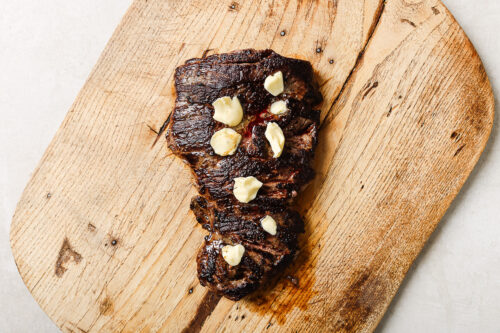
What makes this version different is when the butter goes on. Most recipes sear the steak in oil and spoon garlic butter over it at the end. I rub softened butter and dry mustard directly onto the raw steak before it ever touches the pan. Then I add more butter while it rests. The first layer browns into a dark, savoury crust, and the second melts into the juices on the cutting board, so you get a built-in sauce with no extra pan.
On busy nights I serve it with my Roasted Sweet Potatoes, since they roast while the steak comes to room temperature. This time of year, I also love it next to my Shaved Brussels Sprouts Salad, because the crunch and lemony dressing cut through the butter. And if you love the idea of a buttery steak dinner but want something for a holiday table, my Garlic Butter Beef Tenderloin uses the same idea on a showstopper cut.
The Three Ingredients That Make This Steak
All ingredients and their amounts are listed in the recipe card at the bottom of this post.
Flank Steak: I use one 1½ pound flank steak. It’s usually about ¾ inch thick and feeds four people. Look for a steak with an even thickness from end to end and clear, long muscle lines running down its length. Those lines are the grain, and you’ll want to see them clearly when it’s time to slice.
Flank steak is often confused with skirt steak, and I’ve made this recipe a couple of times with skirt. It works, but skirt is thinner and fattier, so it cooks in about half the time and goes from medium rare to overcooked very quickly. If your flank steak is too long for your skillet, cut it in half crosswise and sear the pieces side by side. A steak that curls up the sides of the pan steams instead of browning.
Flank steak is also the cut I use for my Carne Asada, where a lime, garlic, and cumin marinade does the flavour work on the grill. For this pan seared version, I skip the marinade completely. A hot skillet and the mustard butter crust give it all the flavour it needs in a fraction of the time.
Pro Tip: Flank steak is lean, so I recommend cooking it no further than medium. Past that point, the long muscle fibres tighten and turn chewy no matter how thinly you slice.
Dry Mustard: This is the quiet ingredient most people skip, and it’s the one I’d never leave out. Dry mustard doesn’t make the steak taste like mustard. It sharpens the beef flavour and adds a gentle warmth to the crust. It also helps the butter rub cling to the meat instead of sliding off. I use about 1 teaspoon. I’ve tested this with Dijon instead, but the extra moisture kept the crust from getting as dark.
Softened Butter: You need 3 tablespoons, divided, and it has to be truly soft, like room temperature soft. Cold butter won’t spread into the scored cuts. I use about 1 tablespoon for the rub and save the rest to melt over the steak while it rests. Butter rubbed onto the steak browns much faster than oil, which is exactly what gives this crust its deep colour. Just turn on your hood fan before the steak goes in.
How To Make Pan Seared Flank Steak
Before you start: take the steak out of the fridge 30 minutes ahead. You’ll want a 12 inch cast iron skillet or another heavy pan. I don’t recommend nonstick, because it can’t safely handle the heat you need for a real sear. If you don’t have a heavy skillet, or you’d rather skip the stovetop smoke, my Carne Asada in the Oven shows how I cook flank steak under the broiler instead.
1. Take the chill off and trim. I take the steak out of the fridge 30 minutes before cooking and trim off any silvery connective tissue on the surface. A steak that isn’t ice cold in the centre cooks more evenly. That matters with a thin cut like flank, where the outside can overcook before a cold middle catches up. The silverskin doesn’t melt during a quick sear, so it’s better to remove it now than to chew it later.
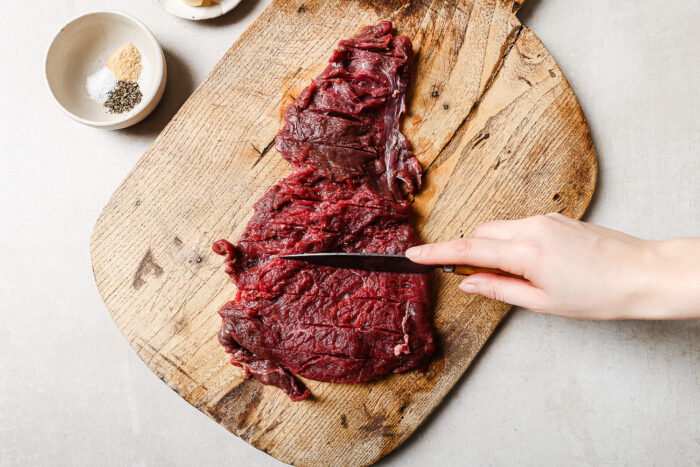
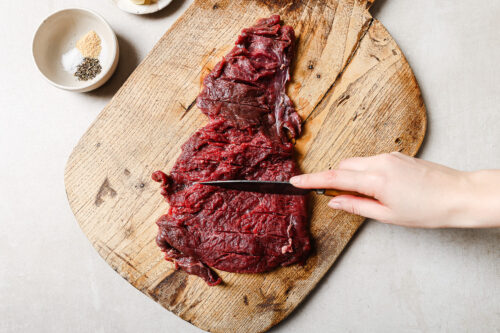
2. Score both sides. Using a sharp knife, I make shallow cuts about 1 inch apart on one side, then flip the steak and repeat. The cuts should be no deeper than about ⅛ inch. Scoring gives the salt and mustard butter more surface to grab onto. It also keeps the steak from curling and buckling in the hot pan, so the whole surface stays flat against the skillet and browns evenly.
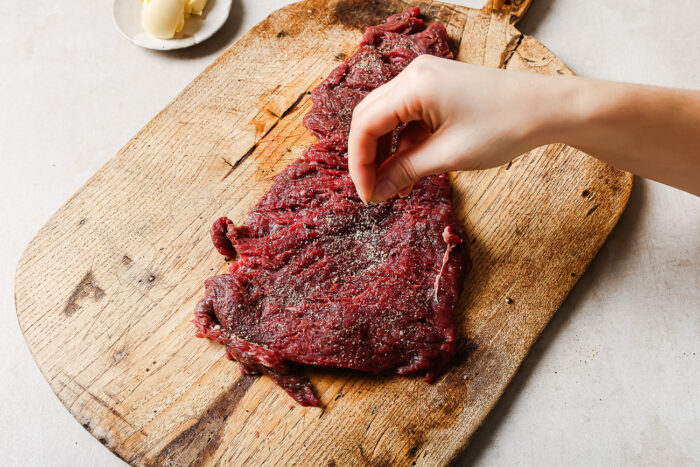
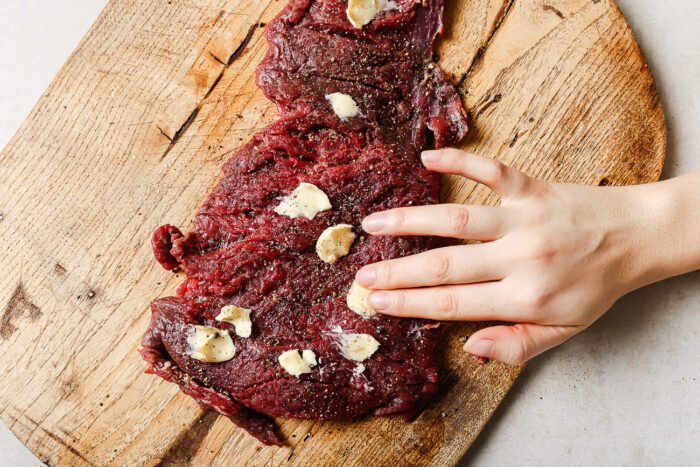
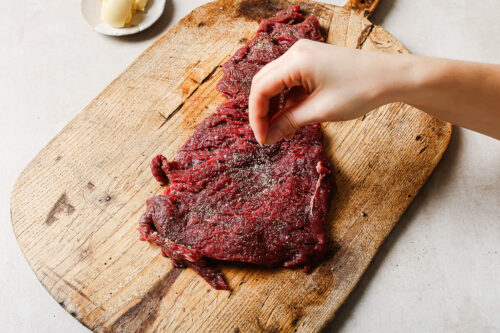
3. Season and rub with butter. I rub both sides with kosher salt, black pepper, and dry mustard. Then I spread about 1 tablespoon of the softened butter over the top, working it into the cuts with my fingers. Pressing the butter into the scores is what makes the crust so even. Every ridge gets coated, not just the high spots.
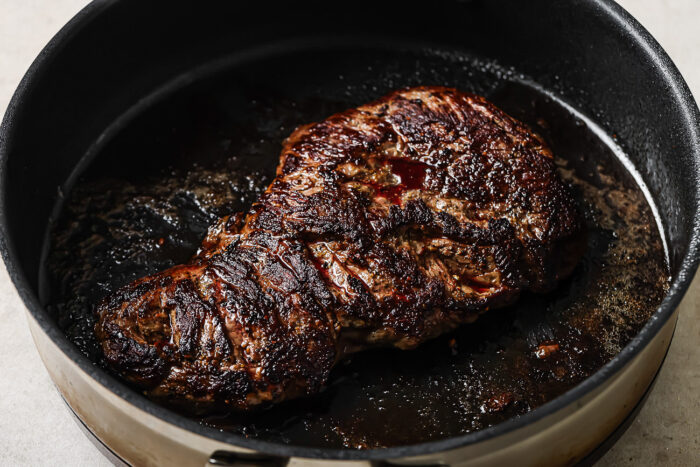
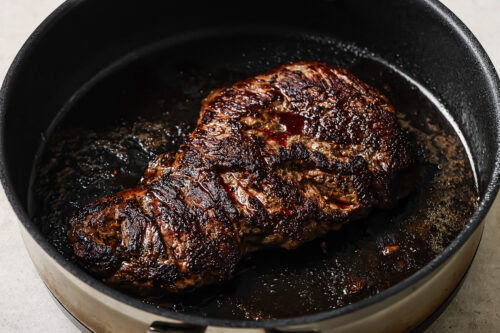
4. Sear in a hot skillet. I heat the cast iron skillet over high heat until it’s very hot, about 3 to 4 minutes, then lay the steak in away from me. I cook it for 4 to 5 minutes without touching it, flip it once, and cook it 3 to 5 minutes more. Leaving it alone is how the crust forms. If the steak sticks when you try to flip it, give it another 30 seconds and it will release on its own. I start checking the temperature at the thickest part after about 3 minutes on the second side, and pull it when it hits my target. The timing chart below gives the numbers.
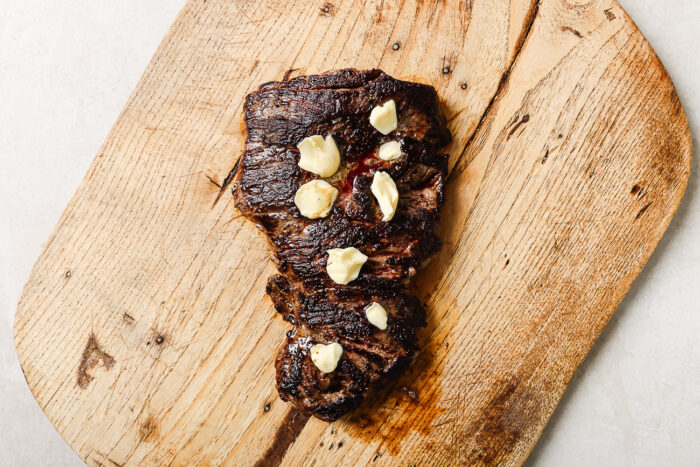
5. Rest with the remaining butter. I move the steak to a cutting board, dot it with the remaining 2 tablespoons of butter, and let it rest for 10 minutes. Don’t rush this step. Flank steak is thin, so juices that haven’t had time to settle will run straight out onto the board when you slice. As it rests, the butter melts into those juices and becomes the sauce.
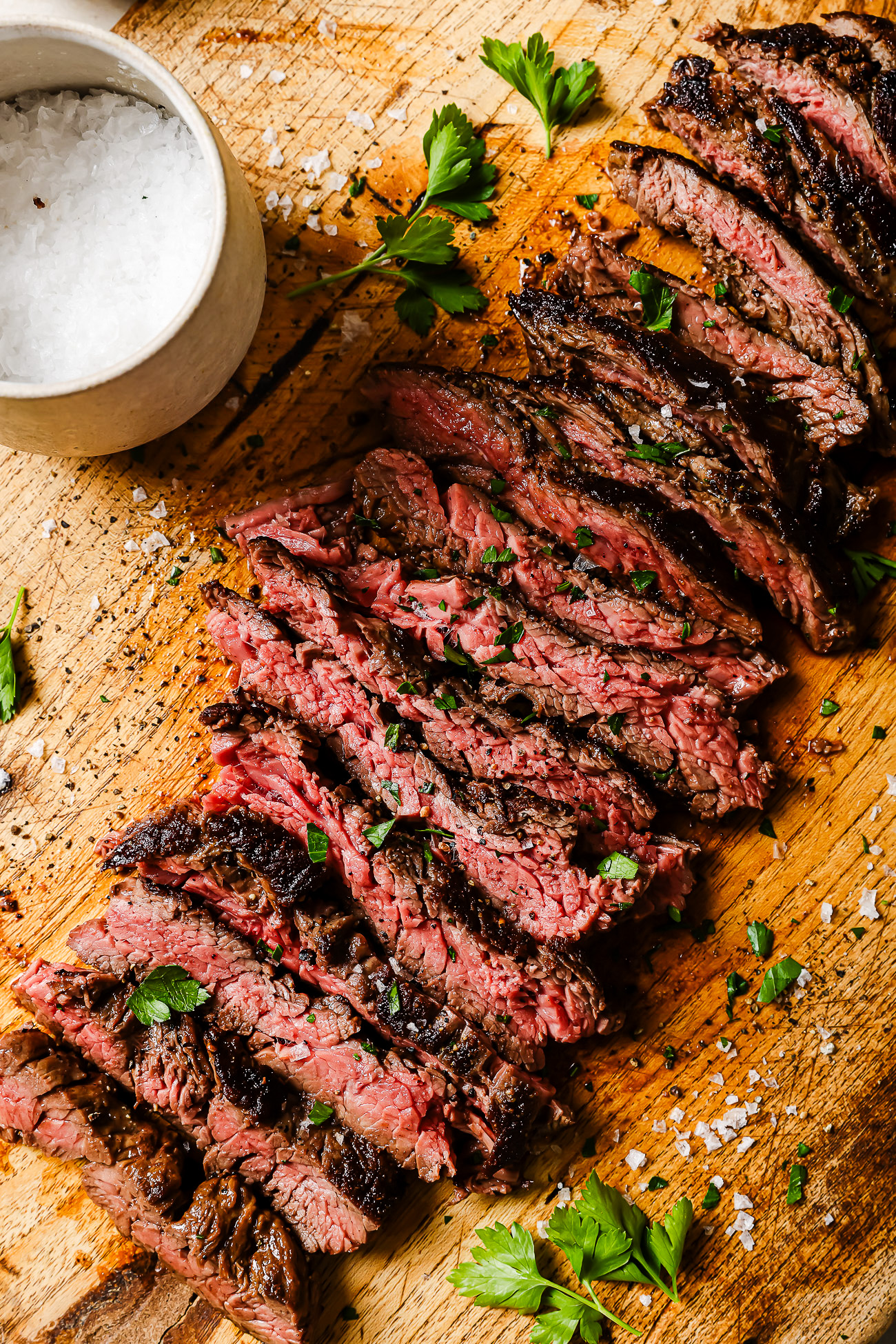
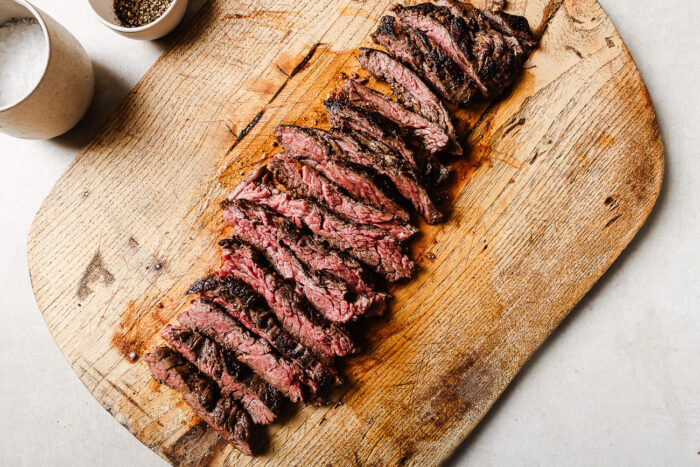
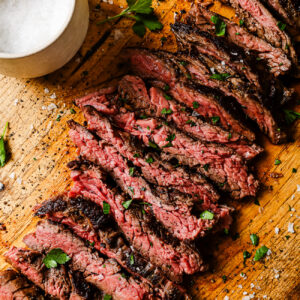
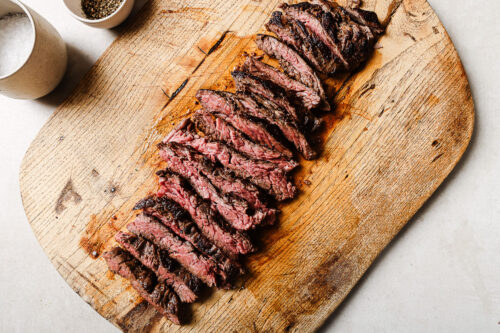
6. Slice thin against the grain. This is the step that decides whether your flank steak is tender or chewy. Look at the steak and find the long lines running down its length. I turn the board so those lines run left to right, then hold my knife at a slight diagonal and cut straight across them in thin slices, about ¼ inch thick. Cutting across the grain shortens the muscle fibres, so each bite is tender. Cutting along the grain leaves long, stringy fibres, even on a perfectly cooked steak. I spoon the buttery juices from the board over the slices right before serving.
How Long to Cook Flank Steak on the Stove
On high heat, a ¾ inch flank steak needs about 4 to 5 minutes on the first side and 3 to 5 minutes on the second. A thinner steak, around ½ inch, needs only 3 minutes per side. Times change with your stove and pan, though, so an instant read thermometer is the only reliable guide. I pull the steak about 5°F before my target because it keeps cooking while it rests.
| Doneness | Pull from the pan | After resting |
|---|---|---|
| Rare | 120°F | 125°F |
| Medium rare | 125°F | 130 to 135°F |
| Medium | 135°F | 140 to 145°F |
Medium rare is where I think flank steak tastes best. The USDA recommends cooking whole cuts of beef to 145°F with a 3 minute rest, so cook it to medium if that’s your preference.
Best Tips To Make Pan Seared Flank Steak
Pat the steak dry before it gets the rub. Flank steak straight out of the package is often wet. Surface moisture turns into steam in the pan and fights the crust. Ten seconds with a paper towel makes a visible difference.
Don’t add oil to the pan. The butter on the steak is enough fat to sear it. Adding oil on top of it makes the pan smoke more and leaves the crust greasy instead of crisp.
Give the steak a minute between sides if your pan cools down. If you notice the sizzle fading when you flip, lift the steak onto a plate for 60 seconds so the skillet can recover its heat, then put it back. This helps the second side brown as deeply as the first, especially on electric stoves.
Turn it into a full plate with a fresh sauce. The buttery juices are lovely on their own. But when I want something bright, I spoon over the herby chimichurri sauce from my Grilled Chicken Chimichurri. It takes 5 minutes to make while the steak rests.
Slice only what you’ll eat right away. Whole leftover steak stays juicier in the fridge than slices do. I slice the leftovers cold the next day, which also makes it much easier to get very thin, even strips.

Pan-Seared Flank Steak
Ingredients
- 1½ pounds flank steak
- Kosher salt
- Freshly ground black pepper
- Dry mustard
- 3 tbsp Softened butter divided
Instructions
- Bring to Room Temp: Remove the steak from the fridge 30 minutes before cooking. Trim any tough connective tissue.
- Score: Using a sharp knife, make shallow cuts about 1 inch apart, about ⅛ inch deep. Flip and repeat on the other side, keeping the cuts parallel.

- Season: Pat the steak dry. Rub both sides with salt, pepper, and dry mustard, then spread about 1 tablespoon of the softened butter over the steak, working it into the cuts.
- Sear: Heat a heavy skillet over high heat until very hot. Cook the steak for 4 to 5 minutes, flip, and cook 3 to 5 minutes more, until nicely browned and the thickest part reaches 125°F for medium rare.
- Rest: Remove from the heat, top with the remaining butter, and let rest for 10 minutes.
- Slice: Cut into thin slices against the grain and spoon the juices from the board over the top.
Notes
To reheat: Reheat in the oven until warmed through. You can also reheat it in the microwave.
To freeze: Tightly wrap and freeze for up to 3 months.
Nutrition
Nutrition information is automatically calculated, so should only be used as an approximation.
Did You Make This?
Follow @primaverakitchen on Instagram, snap a photo, and tag it #primaverakitchen. We’d love to see your recreation.