
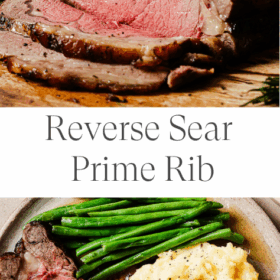
The Reverse Sear Prime Rib method delivers perfectly even doneness from edge to edge, locking in all those flavorful juices for a tender, melt-in-your-mouth interior. The slow roast builds rich flavor, while the final high-heat sear creates a beautifully caramelized crust. It’s the foolproof way to serve a show-stopping prime rib. Perfect for holidays, gatherings, and any special occasion.
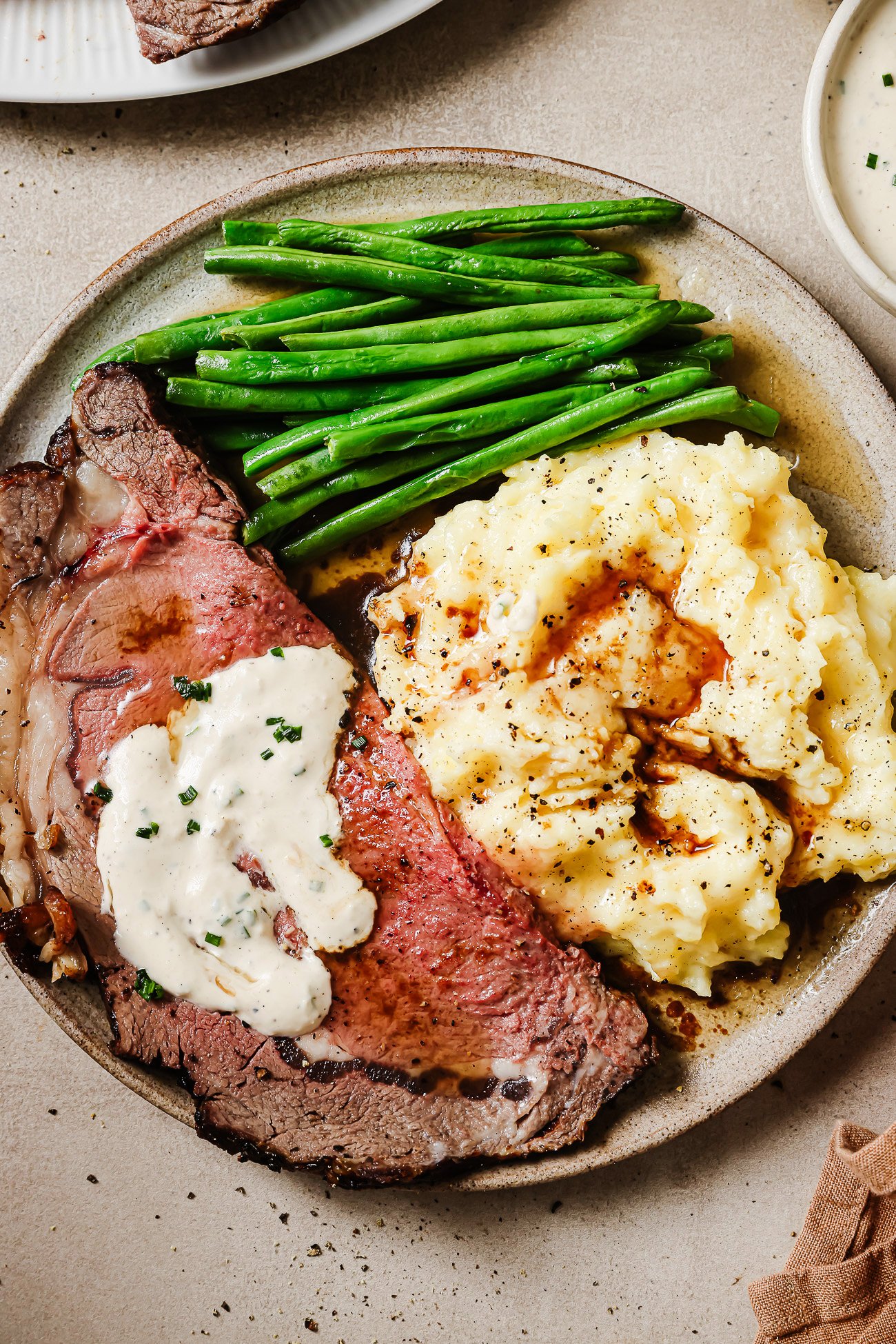


Why I love this method?
Few dishes say “holiday feast” quite like a perfectly roasted prime rib.
Also known as a standing rib roast, it’s the ultimate centerpiece for Thanksgiving or Christmas dinner, right up there with turkey and beef tenderloin. While it might seem intimidating, the reverse sear method takes all the guesswork out of cooking and guarantees flawless results every time.
By seasoning it well and roasting it slowly at a low temperature with a probe thermometer, then finishing with a quick high-heat sear, you’ll achieve that perfect balance of flavor and texture every time.
The result is a perfect crust (beautifully browned) and an evenly rosy, tender interior from edge to edge, filled with rich, beefy flavor and the irresistible aroma of garlic, fresh herbs, and Worcestershire sauce, without a single overcooked spot in sight. Enjoy!
Key Ingredients and Notes:
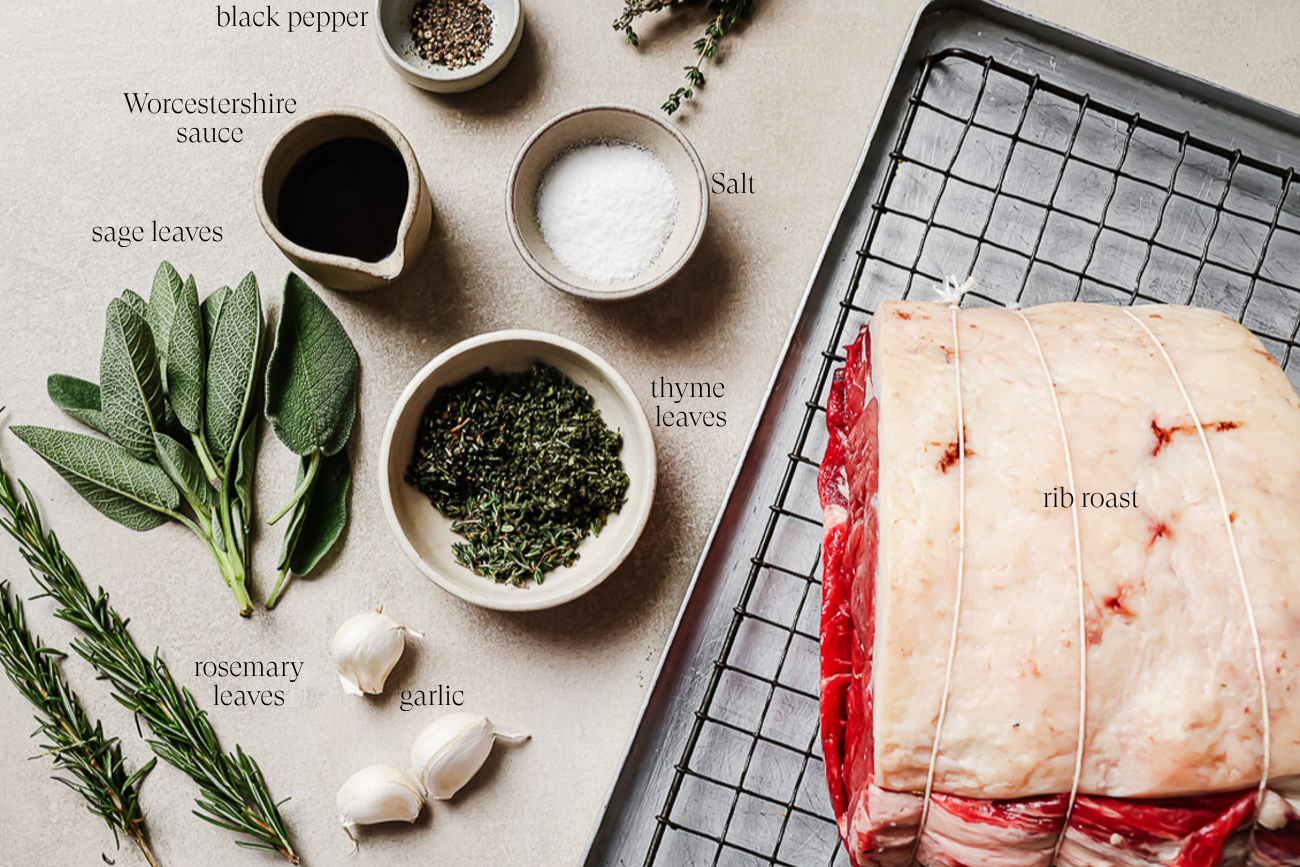
All ingredients and their amounts are listed in the recipe card at the bottom of this post.
Prime Rib Roast: I highly recommend bone-in prime rib for the best flavor and presentation. The bones add incredible richness and help insulate the meat, keeping it juicy and tender. I usually ask the butcher to remove the bone and tie it back on. It makes carving so much easier later while still giving you all the flavor benefits of a bone-in roast. When choosing your roast, look for one with good marbling (thin white streaks of fat throughout the meat). That marbling melts as it cooks, basting the meat from the inside and giving you that buttery, melt-in-your-mouth texture.
Now, if you’re wondering what size prime rib to buy for your group, I’ve included a handy chart below with all the info you need to make your life easier!
| Number of People | Bone-In Prime Rib | Boneless Prime Rib |
|---|---|---|
| 2–3 people | 3–4 lb roast | 2–3 lb roast |
| 4–6 people | 5–6 lb roast | 4–5 lb roast |
| 7–8 people | 7–8 lb roast | 6–7 lb roast |
| 9–10 people | 9–10 lb roast | 7–8 lb roast |
Also, if you decide to buy a boneless prime rib, keep in mind that the cooking time will change. Bone-in prime rib usually takes a bit longer to cook because the bones act as insulation, slowing down how quickly the heat reaches the center. It typically adds about 20–30 extra minutes for the same weight.
Always cook by internal temperature, not time. Every roast is different in shape, fat content, bone thickness, and even how your oven heats. That’s why a meat thermometer is your best friend for perfect results.
Worcestershire Sauce: This adds a deep, savory base flavor and helps the seasonings stick to the roast. It enhances the meat’s natural umami notes without overpowering the herbs.
Garlic: Fresh garlic brings warmth and depth to every bite. Minced garlic releases more flavor and blends beautifully into the seasoning paste, ensuring every slice has that perfect savory aroma.
Fresh Rosemary, Sage, and Thyme: This trio of herbs gives the roast its classic holiday aroma. Rosemary adds an earthy, pine-like note; sage brings a subtle peppery flavor; and thyme ties it all together with gentle freshness. After testing different combinations, I found this balance gives just the right depth without overpowering the beef.
Kosher Salt: Salt is key for dry brining and pulling out the meat’s natural juices to create an incredible crust. If you’re using table salt, reduce to 1½ teaspoons since it’s finer and more concentrated.
Equipment Necessary to Make this Recipe:
To make the perfect reverse-sear prime rib, having the right tools on hand makes all the difference. These simple pieces of equipment help you cook evenly, monitor temperature accurately, and carve your roast like a pro. So you get flawless results every time.
Large rimmed baking sheet + wire rack (or shallow roasting pan) – Elevates the roast so heat circulates evenly and catches drippings for easy cleanup.
Oven-safe probe thermometer – Ensures precise internal temperature for perfect doneness—no guesswork.
Paper towels, aluminum foil – Pat the roast dry for a better crust; use foil to tent while resting and keep it warm.
Carving knife + cutting board with juice groove – A sharp knife makes clean slices, and the groove catches flavorful juices.
How to Make Reverse Sear Prime Rib
1. Prepare the Roast:
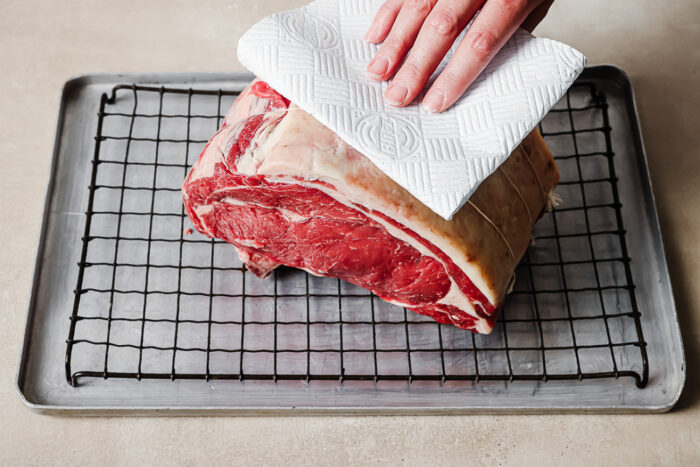
Step 1: If the bone was removed and tied back on, keep it tied. Pat the entire roast dry with paper towels.

Step 2: Gently score the fat cap with shallow (thin cuts) just enough to mark the surface without cutting into the meat. This allows the seasoning to absorb better.
2. Season and Dry Brine:
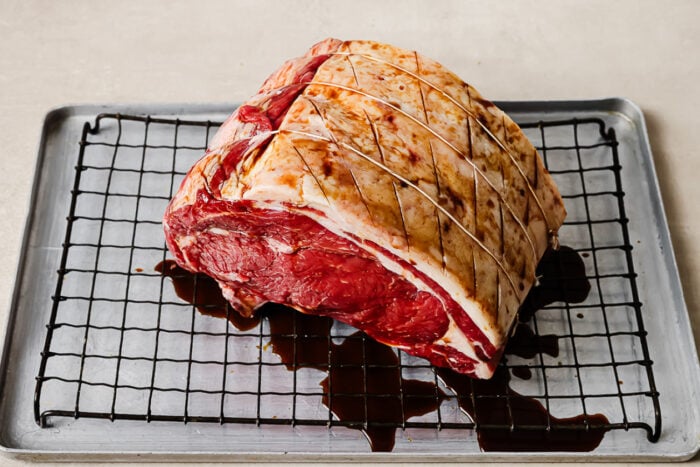
Step 3: Rub with Worcestershire sauce and set aside.

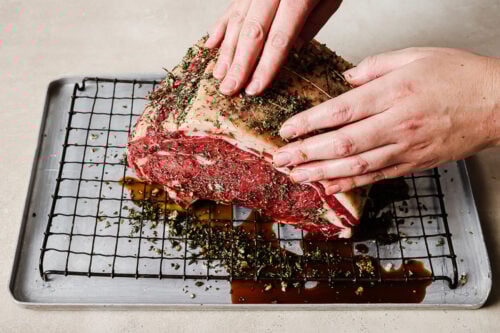
Step 4: In a small bowl, mix garlic, rosemary, sage, thyme, salt, and pepper.
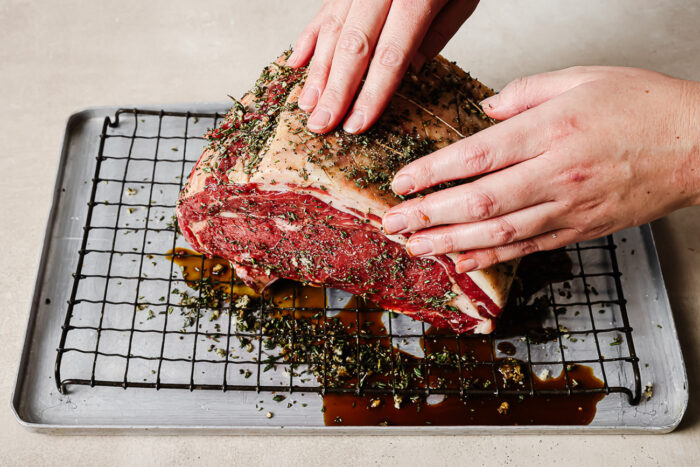
Then: Rub the seasoning mixture evenly over all sides of the roast. If the string loosened, tie the roast again with kitchen twine.
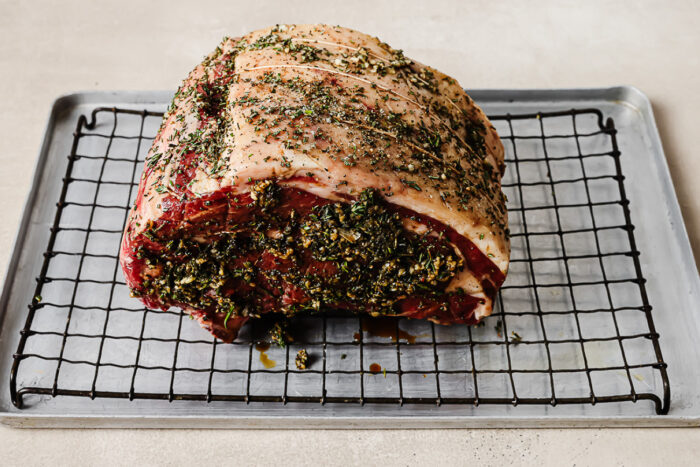
Step 6: Place roast on a wire rack over a foil-lined baking sheet. Chill uncovered in the fridge for 12–24 hours to season deeply and dry the surface.
3. Remove From Fridge and Slow Roast (Reverse Sear Part 1):

Step 7: Preheat oven to 250°F (121°C). Remove from the fridge 1 hour ahead (allow it to come to room temperature). Insert a probe thermometer into the thickest part (avoid bone).
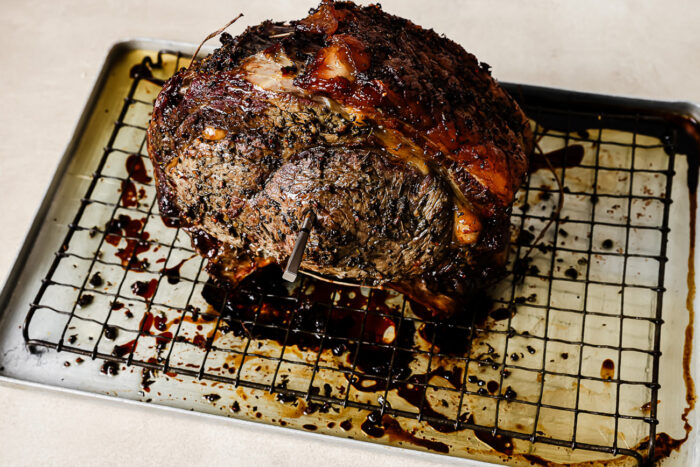
Step 8: Roast until the internal temp reaches 115°F (46°C) for medium-rare, about 3–3½ hours. Remove, tent loosely with foil, and rest 30 minutes while increasing oven temp to high heat at 500°F (260°C).
4. High-Heat Sear (Reverse Sear Part 2):
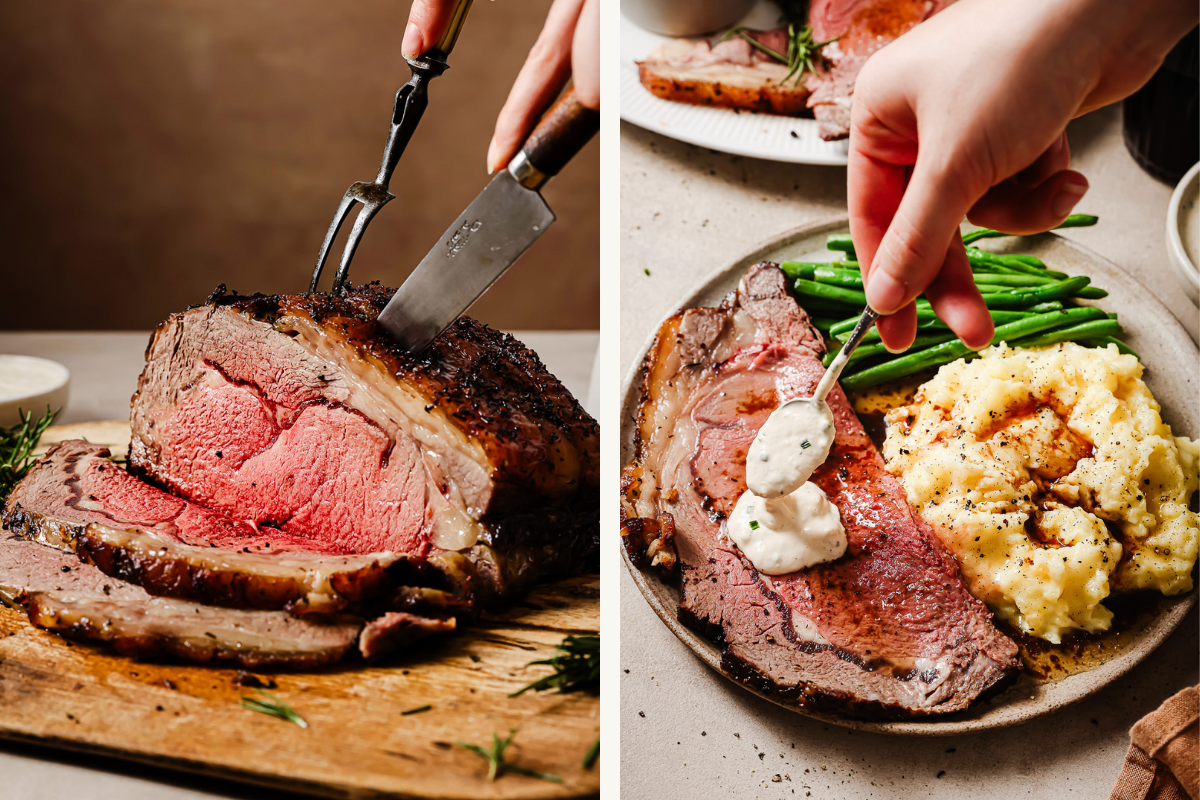
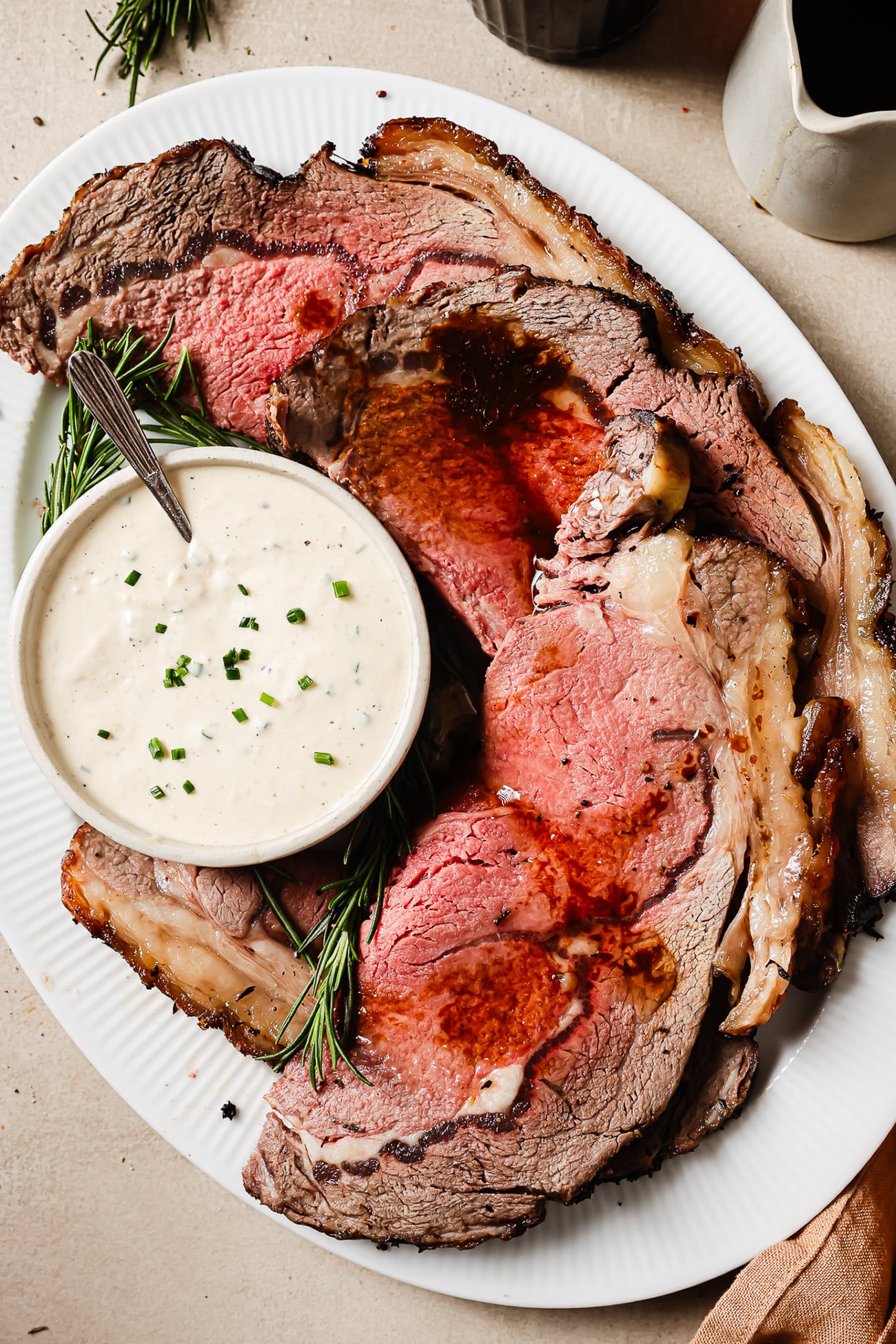
Return roast (uncovered) and cook 10–15 minutes until internal temp hits 130–135°F (54–57°C) for medium-rare. Cut the string, remove the bones, and slice against the grain into ½–1-inch slices. Serve immediately your perfect prime rib with your favorite sides and sauces. I love to serve it with my horseradish sauce. Your guests will love it.
Reverse Sear Prime Rib Temperature Chart:
Cooking by temperature (not time) is the secret to a perfectly cooked prime rib. Since every roast and oven are different, this chart helps you know exactly when to pull your roast from the oven and what final temperature to aim for after the high-heat sear.
| Doneness | Pull from Oven | Final Temp (After Sear) | Color / Texture | Notes |
|---|---|---|---|---|
| Rare | 110°F / 43°C | 120–125°F / 49–52°C | Deep red, very juicy | Cool center, soft texture |
| Medium-Rare (best) | 115°F / 46°C | 130–135°F / 54–57°C | Warm red center, tender | Most flavorful & juicy |
| Medium | 125°F / 52°C | 140–145°F / 60–63°C | Pink throughout | Slightly firmer, still juicy |
| Medium-Well | 135°F / 57°C | 150–155°F / 65–68°C | Slightly pink center | Leaner, less juicy |
| Well Done | 140°F / 60°C | 160°F / 71°C+ | Mostly brown | Least juicy; not recommended |
Pro Tip:
Because you rest the roast while the oven preheats to 500°F, the internal temperature will rise about 5–10°F during that time. Always rely on your probe thermometer and aim for the pull temperatures in the table to hit your desired doneness perfectly after the final sear.
What to Serve with Prime Rib Recipe:
I love serving prime rib with a mix of cozy, classic sides that balance the richness of the roast. Here are some of my favorites that pair beautifully with this show-stopping cut:
Mashed Potatoes – Creamy, buttery potatoes are the ultimate comfort food and soak up all that delicious au jus perfectly.
Potato Gratin – Thinly sliced potatoes baked with cream and cheese. So indulgent and a true holiday favorite.
Roasted Brussels Sprouts – Crispy on the outside, tender on the inside, and full of savory flavor from the bacon.
Green Beans – Light and crisp, they balance the richness of the roast beautifully.
Sauces – Reverse-searing prime rib gives you meat so flavorful and juicy that it truly shines on its own, but a great sauce can take it to the next level. Drizzle each slice with a bold, creamy Horseradish Sauce or a rich, savory Prime Rib Au Jus for that classic steakhouse touch. If you’re in the mood for something extra indulgent, try a Garlic Butter, Aioli Sauce or a homemade Gravy Without Drippings for that perfect, melt-in-your-mouth finish.
Tips for the Best Reverse Sear Prime Rib
Place the roast bone-side down while cooking: This is key! The bones serve as a built-in roasting rack, lifting the meat slightly so air circulates evenly. It also protects the bottom of the roast from overcooking and keeps the juices in the meat instead of pooling underneath.
Watch the temperature closely: During the 500°F (260°C) sear, the internal temp climbs fast. So, keep an eye on your thermometer to avoid overshooting your target doneness.
No need to cover while cooking: Leaving the roast uncovered allows the surface to dry out slightly, which is exactly what you want for that golden, flavorful crust when it’s time to sear.

Reverse Sear Prime Rib – Slow Roasted & Seared for Perfection
Ingredients
- 6 lbs bone-in prime rib roast have butcher remove the bone and tie it back on – easier to carve but keeps flavor.
- 3 tablespoons Worcestershire sauce
- 3 large garlic cloves minced
- 1 tablespoon fresh rosemary leaves finely chopped
- 1 tablespoon fresh sage leaves finely chopped
- 1 tablespoon fresh thyme leaves
- 1 tablespoon kosher salt Windsor or Morton’s brand*
- ½ tablespoon black pepper
Instructions
Prepare the Roast:
- If your butcher removed and tied the bone back on, leave it tied. Pat the entire roast dry with paper towels.

- Lightly score the fat cap with small shallow cuts (don’t cut into the meat). This helps seasoning penetrate.


Season and Dry Brine:
- Rub the roast all over with Worcestershire sauce.
- In a small bowl, mix garlic, rosemary, sage, thyme, salt, and pepper.

- Rub the seasoning mixture evenly over all sides of the roast. If the string loosened, tie the roast again with kitchen twine.
- Place the roast on a wire rack set inside a baking sheet. (Optional but helpful: Line or wrap the baking sheet with aluminum foil before placing the rack on top. This makes cleanup easier and helps catch any drips.)
- Leave uncovered in the fridge overnight (at least 12 hours, up to 24 hours). This dry brine seasons deeply and dries the surface for a better crust.



Remove From Fridge & Insert Thermometer:
- Take roast out of the fridge 1 hour before cooking to take the chill off. Insert a probe thermometer into the center of the thickest part (avoid bone and fat).

Slow Roast (Reverse Sear Part 1):
- Preheat oven to 250°F (121°C). Place the roast (still on the rack set inside the foil-lined baking sheet) in the center of the oven.
- Roast until the internal temperature reaches 115°F (46°C) for medium-rare. This usually takes about 3 to 3.5 hours, but time may vary by oven and roast shape. Keep in mind that the beef will keep cooking a bit even after it’s out of the oven, thanks to residual heat.

Rest the Roast (Very Important):
- Remove roast from the oven, tent it loosely with aluminum foil and let it rest for 30 minutes while the oven preheats. Resting prevents juices from pushing out during the high-heat sear.
- Increase oven temperature to 500°F (260°C).
High-Heat Sear (Reverse Sear Part 2)
- Once the oven is preheated, return the roast (without out the foil on top) and cook until it reaches: 130°F (54°C) internally for medium-rare. This takes about 5-10 minutes. Please, watch carefully because the temperature rises quickly during this step.
- Once it’s done cooking, you can serve it immediately, no resting needed. To carve, cut the kitchen string and remove the bone section. Slice the roast against the grain into ½–1 inch slices. Serve immediately with your favorite sides and sauces.

Notes
Nutrition
Nutrition information is automatically calculated, so should only be used as an approximation.
Did You Make This?
Follow @primaverakitchen on Instagram, snap a photo, and tag it #primaverakitchen. We’d love to see your recreation.








I love your recipes that are well planned and so very delicious, thank you so much, you are the best
Aww so sweet. Thank you so much for this lovely feedback. I appreciate it a lot 😉
O looks amazing!
Thank you so much! It was truly a labor of love, and it turned out amazing. 😉
I’d never been brave enough to do prime rib before, but it turned out fantastic with your precise directions. At least restaurant quality. Thanks so much for this keeper recipe! Hope y’all are doing great and keeping warm up there in Canada! Just love your recipes, and thank you for them!
Thank you so much! I’m thrilled to hear your prime rib turned out beautifully — that makes me so happy! 😊 It means a lot that you trusted my directions, and I love knowing it tasted restaurant-quality for you. Thank you for your kind words and for cooking with my recipes! 💛