
This is my go-to method for cooking salmon in the oven, and I’ve been making it for over 12 years. You only need one pan, a few basic seasonings, and 15 minutes in the oven to get tender, flaky salmon with a lightly golden top. I bake it at 375°F, which I’ve found is the best temperature for keeping the inside moist without drying out the edges. It works with Atlantic, king, coho, or sockeye salmon, and it’s simple enough for a busy weeknight but good enough to serve to guests.
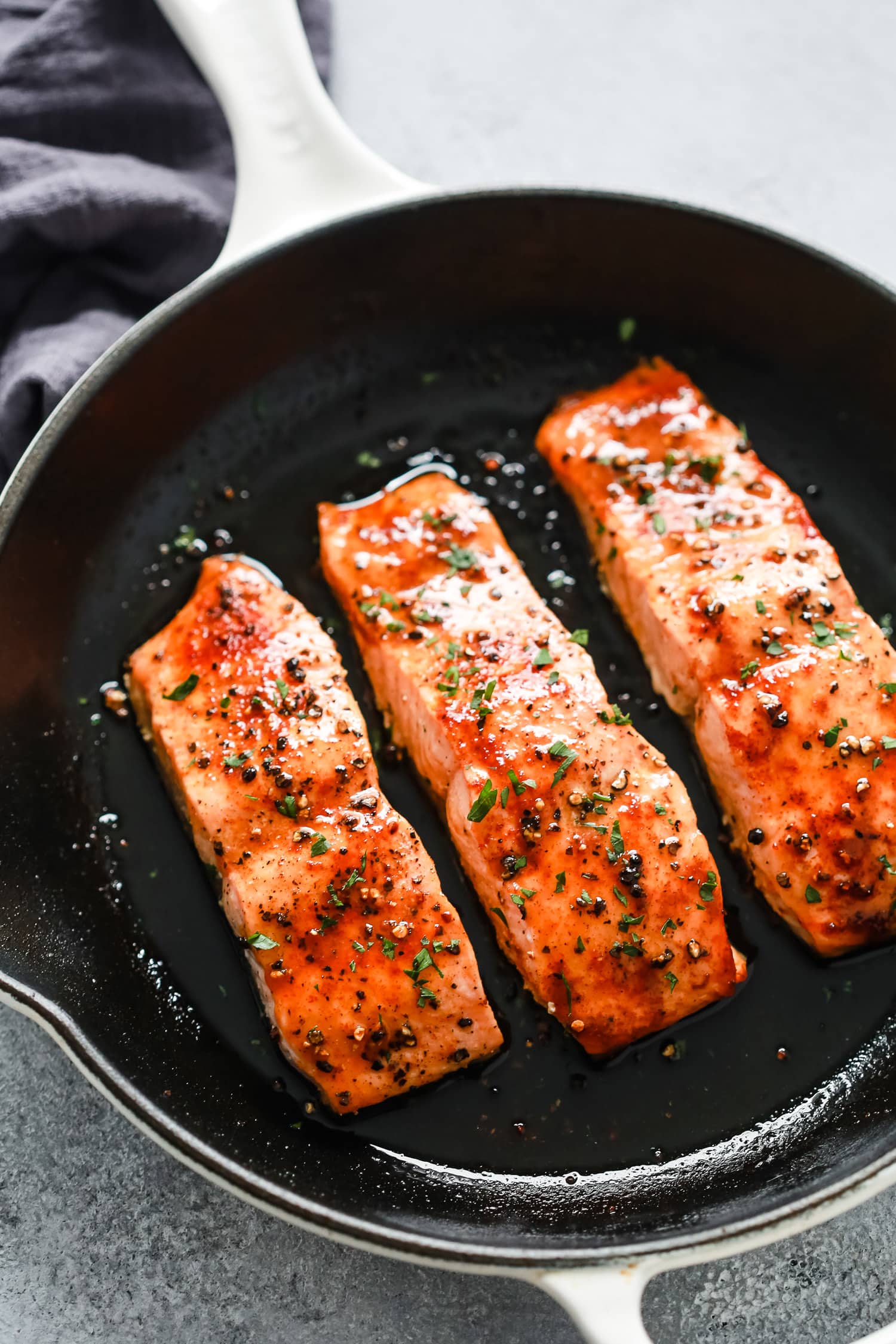


My Go-To Salmon Method
I’ve been cooking salmon for over 12 years, and I have more than 25 salmon recipes on Primavera Kitchen. Of all the ways I’ve tested, this simple oven method is the one I make the most.
It’s reliable, hands-off, and gives you tender, flaky salmon every single time without any complicated techniques or hard-to-find ingredients. I make it on busy weeknights when I need dinner on the table in 20 minutes, and I make it for meal prep when I want something healthy ready to go for the week.
My family loves it, and honestly, so do I. Two versions we keep coming back to are my Garlic Butter Salmon and Air Fryer Salmon, but this basic oven method is where I always start.
If you’re wondering what temperature to use, how long to bake it, or how to tell when it’s done without overcooking it, I cover all of that below based on real testing in my own kitchen.
Gather the Ingredients:
Salmon fillets: I always use skin-on salmon fillets. The skin acts as a natural barrier between the flesh and the heat, which helps the salmon stay moist and prevents it from drying out on the bottom. I prefer center-cut fillets when I can find them because they have a more even thickness, which means they cook more evenly. I typically use Atlantic salmon for this recipe, but I’ve made it with king, coho, and sockeye too, and they all work beautifully.
Pro Tip: Wild-caught salmon has a more complex, deeper flavor and is my preference when I can find it at the market. That said, farmed Atlantic salmon is what I use on most weeknights because it’s reliable, widely available, and stays moist in the oven. Either one works beautifully in this recipe.
Olive oil: I always coat the fillets with olive oil before seasoning. This helps the seasoning stick, encourages a light golden color on the surface, and keeps the flesh from drying out during baking. I use extra virgin olive oil, but any neutral oil like avocado oil works just as well.
Salt and black pepper: I never skip a generous seasoning of salt and pepper. This is the base that brings out the natural flavor of the salmon. I like to season right before the salmon goes into the oven so the salt doesn’t draw out moisture.
Paprika: I always add paprika because it gives the salmon a beautiful warm color and a very mild smoky flavor that complements the richness of the fish. You can swap it for smoked paprika for a deeper flavor, or use Cajun seasoning if you want a little heat.
Fresh parsley: I always finish with fresh parsley just before serving. It adds a little brightness and color that makes the dish look as good as it tastes.
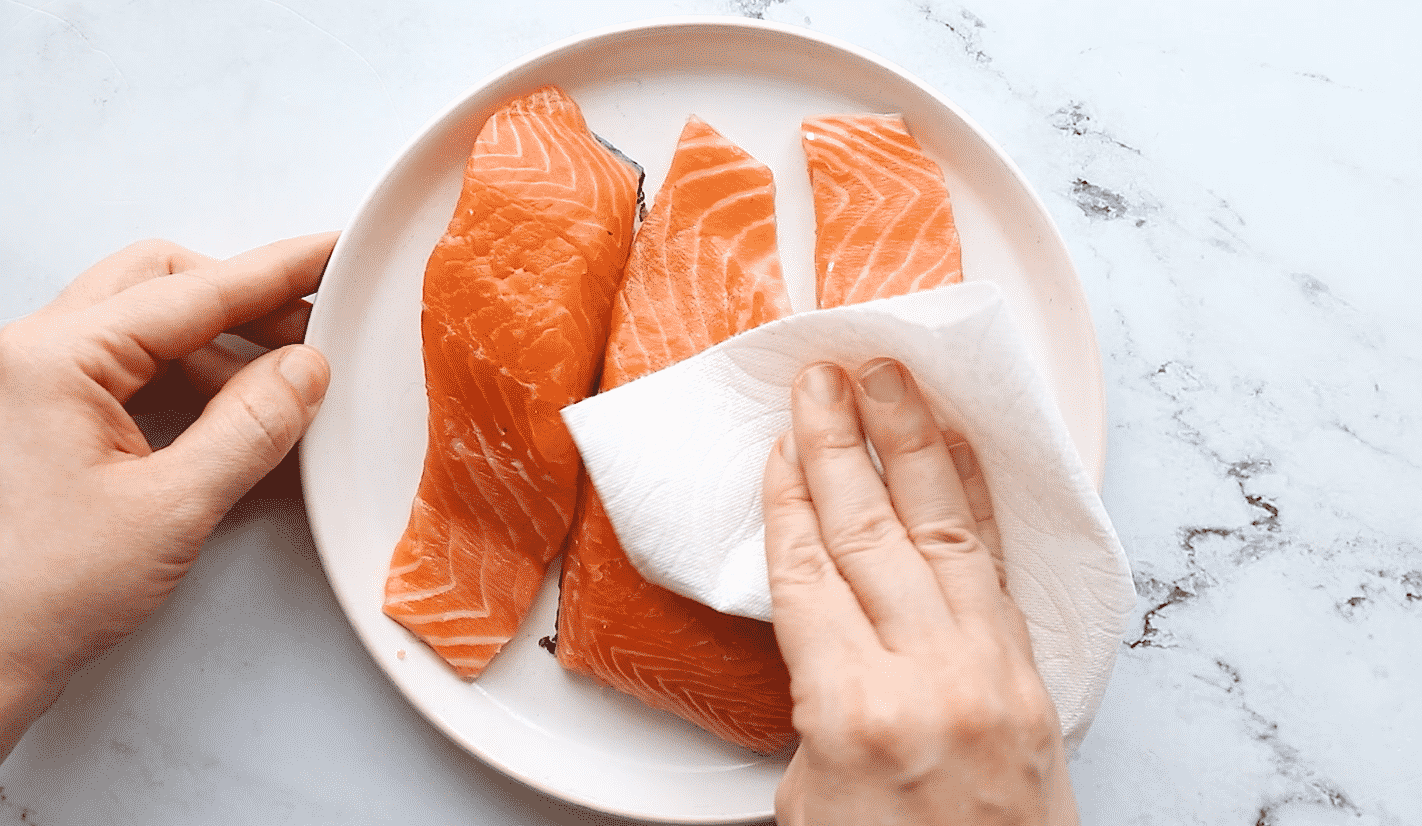
Step 1: Pat the salmon dry and let it rest. I always take my salmon out of the fridge about 10 minutes before baking. A fillet that’s too cold goes into the oven at an uneven temperature, which means the outside can overcook before the center is done. I also pat it dry with a paper towel, and this step matters more than people think. A dry surface means the olive oil grips the fish properly and you get that light golden color on top instead of the salmon just steaming in its own moisture.
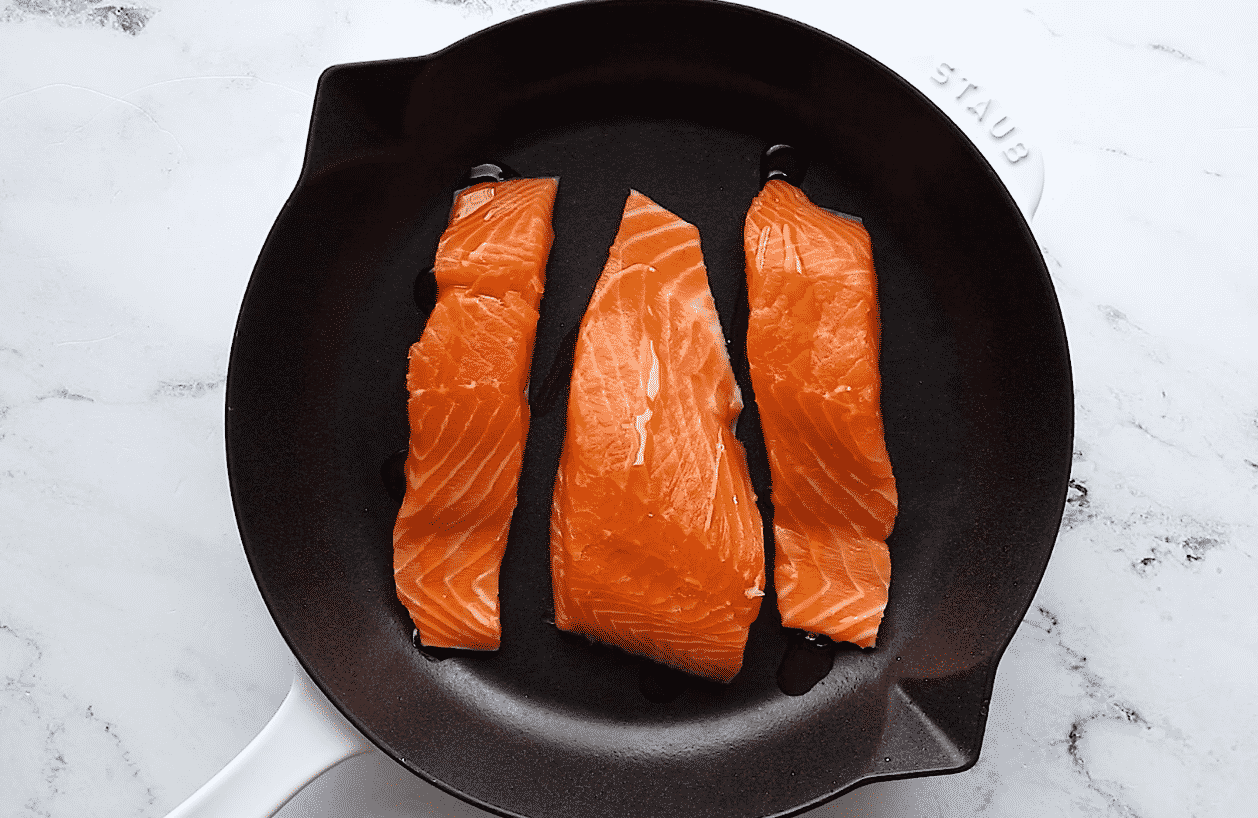
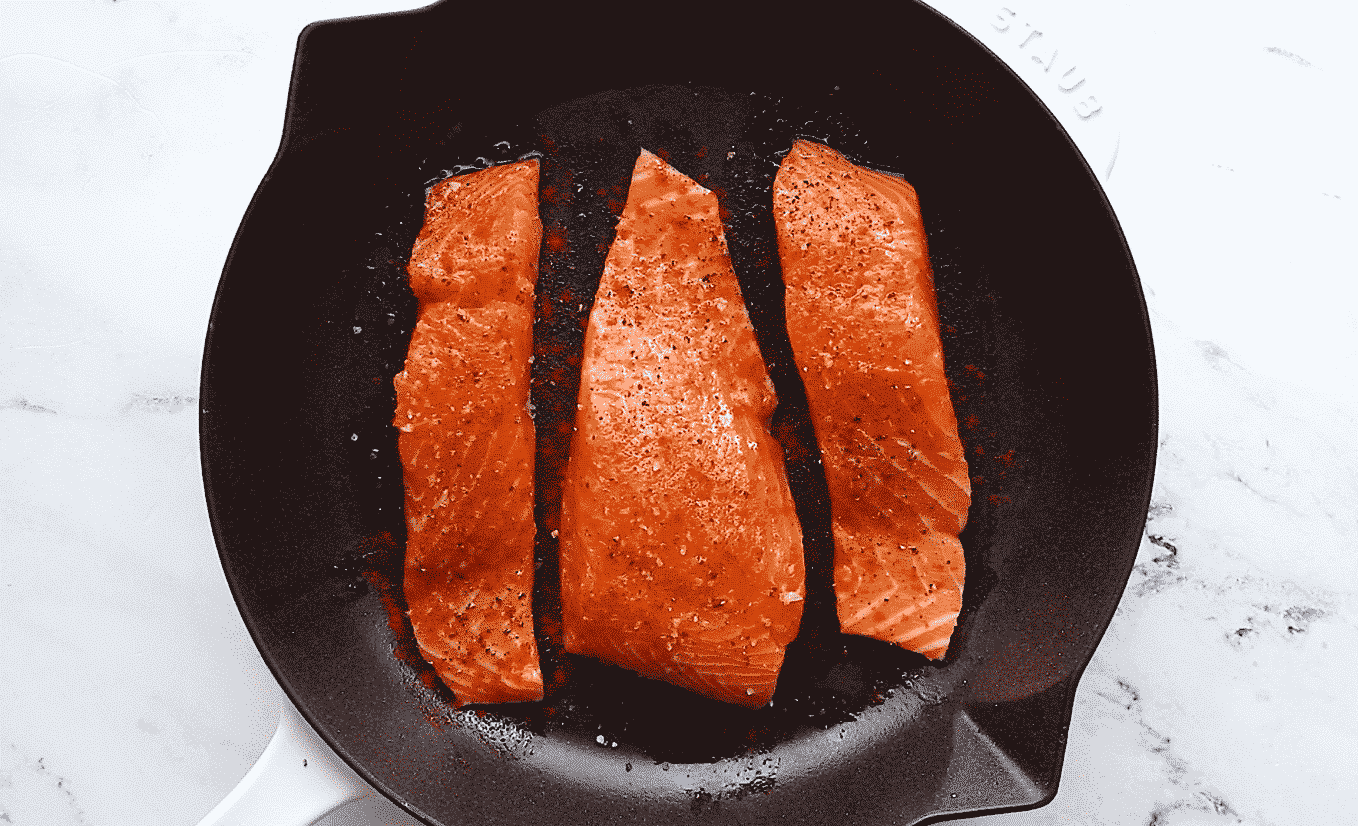
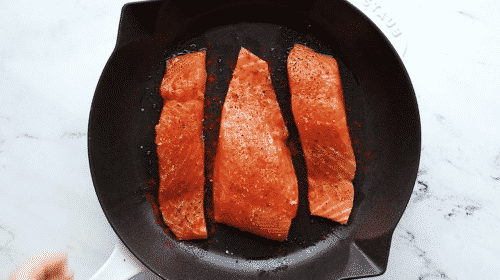
Step 2: Season generously, skin-side down. I always place the salmon skin-side down, no exceptions. The skin acts as a protective layer between the flesh and the heat of the pan, which keeps the bottom of the fillet from drying out. Once it’s placed, I drizzle olive oil over the top and use my fingers to rub it all over so there are no dry spots. Then I season generously with salt, pepper, and paprika right before it goes into the oven. I never season too far in advance because salt draws moisture out of the fish.
Step 3: Bake and check early. I bake at 375°F and I always start checking at the 10-minute mark, especially for thinner fillets. Salmon goes from perfectly done to overcooked quickly, and checking early costs you nothing. For exact times based on fillet thickness and oven temperature, see my guide below.
Step 4: Bake for 10 to 15 minutes. The exact time depends on the thickness of your fillets. I always start checking at the 10-minute mark for thinner fillets (about 3/4 inch) and at 12 to 13 minutes for thicker ones (about 1 inch). See my full temperature and time guide below for exact times at different oven temperatures.
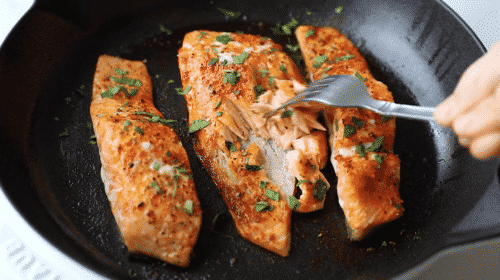
Step 5: Salmon is done when it reaches a minimum internal temperature of 145˚F. Use a meat thermometer to check the internal temperature. You also know if it’s ready when the salmon flakes easily with a fork. Before serving, top with some fresh parsley or other fresh herbs of your preference.
Want to try a different method? I have a full guide to Pan Seared Salmon and Broiled Salmon on the blog.
How Long to Cook Salmon in the Oven
I get this question more than any other, and the honest answer is that it depends on two things: the thickness of your fillet and your oven temperature. After years of testing, here is what works consistently in my kitchen.
At 350°F: 20 to 25 minutes for a 1-inch fillet. I use this when I want very gentle, even cooking.
At 375°F: 12 to 15 minutes for a 1-inch fillet. This is my preferred temperature. It gives you moist, tender salmon with a lightly golden surface.
At 400°F: 10 to 12 minutes for a 1-inch fillet. Works well but watch it closely, because the difference between perfectly done and overdone is only a minute or two.
At 425°F: 8 to 10 minutes for a 1-inch fillet. Good for crispier edges, but leaner wild-caught salmon like sockeye can dry out quickly at this temp.
A simple rule I always follow: about 4 to 6 minutes of bake time per half inch of thickness, measured at the thickest part of the fillet.
How to Tell When Salmon is Done
I always check my salmon using two methods together, never just one.
Internal temperature. I insert a meat thermometer into the thickest part of the fillet. At 145°F it’s fully cooked. I personally pull mine at 140°F because carry-over cooking finishes it perfectly on the plate.
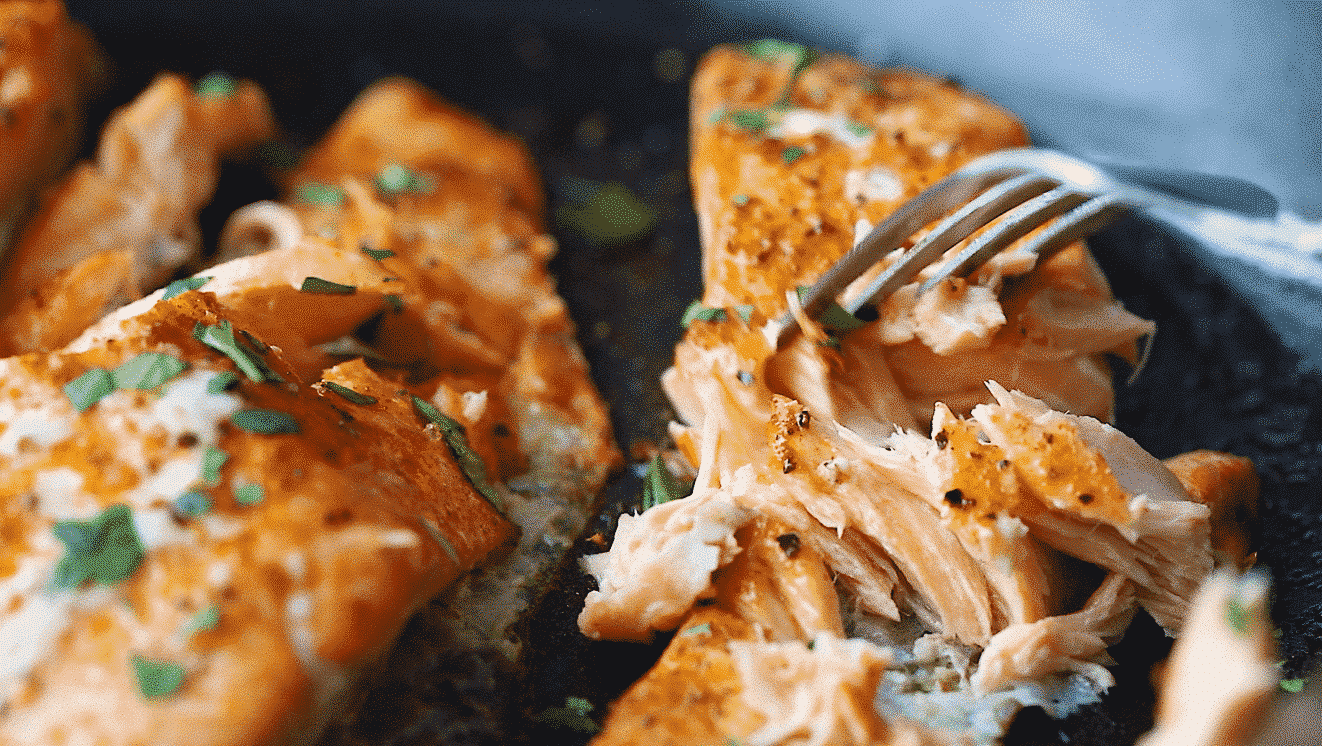
The fork test. I press a fork gently into the thickest part and twist slightly. If the flesh flakes apart easily in clean layers, it’s done. If it resists, it needs a few more minutes.
Color. The flesh shifts from deep translucent orange-pink to a lighter opaque pink as it cooks. When just a thin translucent line remains in the very center, it’s ready to come out.
Pro Tip: If you notice white liquid seeping from the salmon while it bakes, that’s albumin, a natural protein that is completely harmless. But if you see a lot of it, your oven temperature is too high. I drop it down by 25°F next time when that happens.

How to Cook Salmon
Video
Ingredients
- 3 medium skin-on salmon fillets
- 1 tablespoon olive oil
- Salt and pepper to taste
- Paprika to taste
- Fresh parsley to garnish chopped
Instructions
- Preheat the oven to 375°. Place a rack in the middle of the oven. Line a baking sheet with parchment paper or just use a cast iron skillet. Remove salmon from the fridge and pat the salmon fillets with a paper towel.
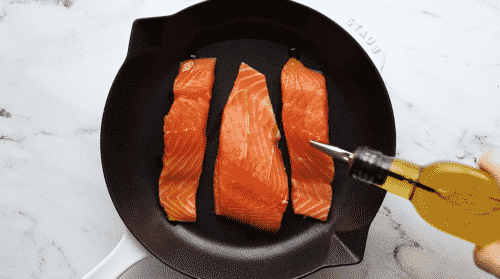
- Place salmon (skin-side dowin the baking sheet or cast iron skillet. Drizzle some oil over the top of each salmon fillet. Use a pastry brush or your fingers to rub the oil all over the salmon.

- Season with salt, pepper and paprika (or Cajun seasoning) and transfer to the oven.

- Bake for 10-15 minutes. Time depends on the thickness of your salmon. So, check it after 10 minutes in the oven. Salmon is done when it gets at the minimum internal temperature of 145˚F. Use a meat thermometer to check the internal temperature. You also know if it’s ready when the salmon flakes easily with a fork. Squeeze a little bit of lemon juice on top of it before serving.
Notes
- To thaw frozen salmon: Place the sealed fillet in a bowl of cold water for 30 to 45 minutes, changing the water halfway through. Or refrigerate overnight for the best texture. Never use warm or hot water as it causes uneven thawing.
- To store: Store leftovers in the fridge in an airtight container for up to 4 days.
- To reheat: You can reheat salmon on the stovetop or microwave.
- To freeze: Freeze in a freezer-safe bag once the salmon fillets have reached room temperature. Freeze for up to 4 months.
Nutrition
Nutrition information is automatically calculated, so should only be used as an approximation.
Did You Make This?
Follow @primaverakitchen on Instagram, snap a photo, and tag it #primaverakitchen. We’d love to see your recreation.
Oven baked salmon pairs well with almost any side. I usually keep things simple on weeknights. Some of my favorites are roasted cauliflower, potato salad, and mashed butternut squash.
For a lighter meal, I flake leftover salmon over a green salad or add it to a grain bowl with rice and roasted vegetables. Roasted asparagus, steamed green beans, or a simple cucumber salad all work beautifully too.








I’d like to think I’m a pretty good cook, but, I’m lacking in fish recipes. Thanks for this!
You’re very welcome!
wow thanks for this post but please kindly guide-me on what flavors i should use which will not have negative impact on my 13 years old daughter ..
It’s hard to say because I don’t know what flavours they like, but I think you can use Italian seasoning, onion powder and garlic powder. They are not very strong!
I love how simple this is! Definitely a great candidate for a busy weeknight dinner, and although I personally don’t like fish too much, salmon is the one exception I make. It’s relatively cheap and if cooked right, just melts in your mouth.
I’m sure you’re going to love this recipe 😉
Please do we preheat the oven from the top and below or just preheat from below
It depends on your oven. Mine just preheat from the top.
this came out perfect in my cast iron pan!
Happy to hear that!
Love this recipe. Quick, easy and very tasty.
Thank you.
Happy you liked it!
Thank you for this recipe, I made baked Salmon and Shrimp over Jasmine Rice #loveit
Sounds yummy!
This recipe sounds delicious!
My question is, do I oil the skin side when prepping as well?
Yes you can do that if you prefer.
Do you preheat the cast iron pan in the oven as well? If not, wouldn’t that crack the pan after it’s placed inside the oven together with the salmon?
Yes sometimes I do and no, it won’t crack the pan.
Excellent!! 👍👍♥️
Happy you enjoyed it!
great recipe; it was perfect!!
Amazing! So happy to hear that 😉