
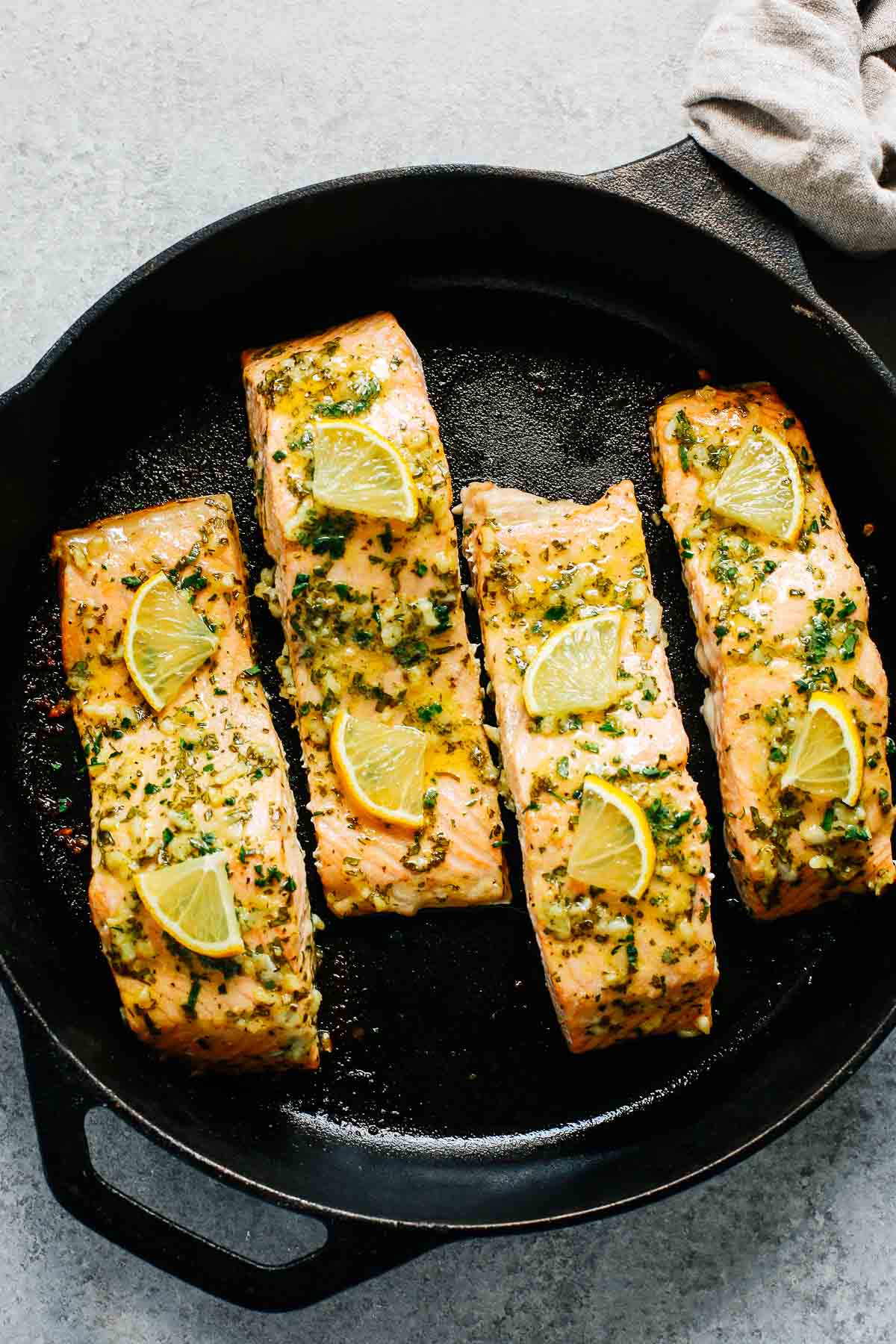
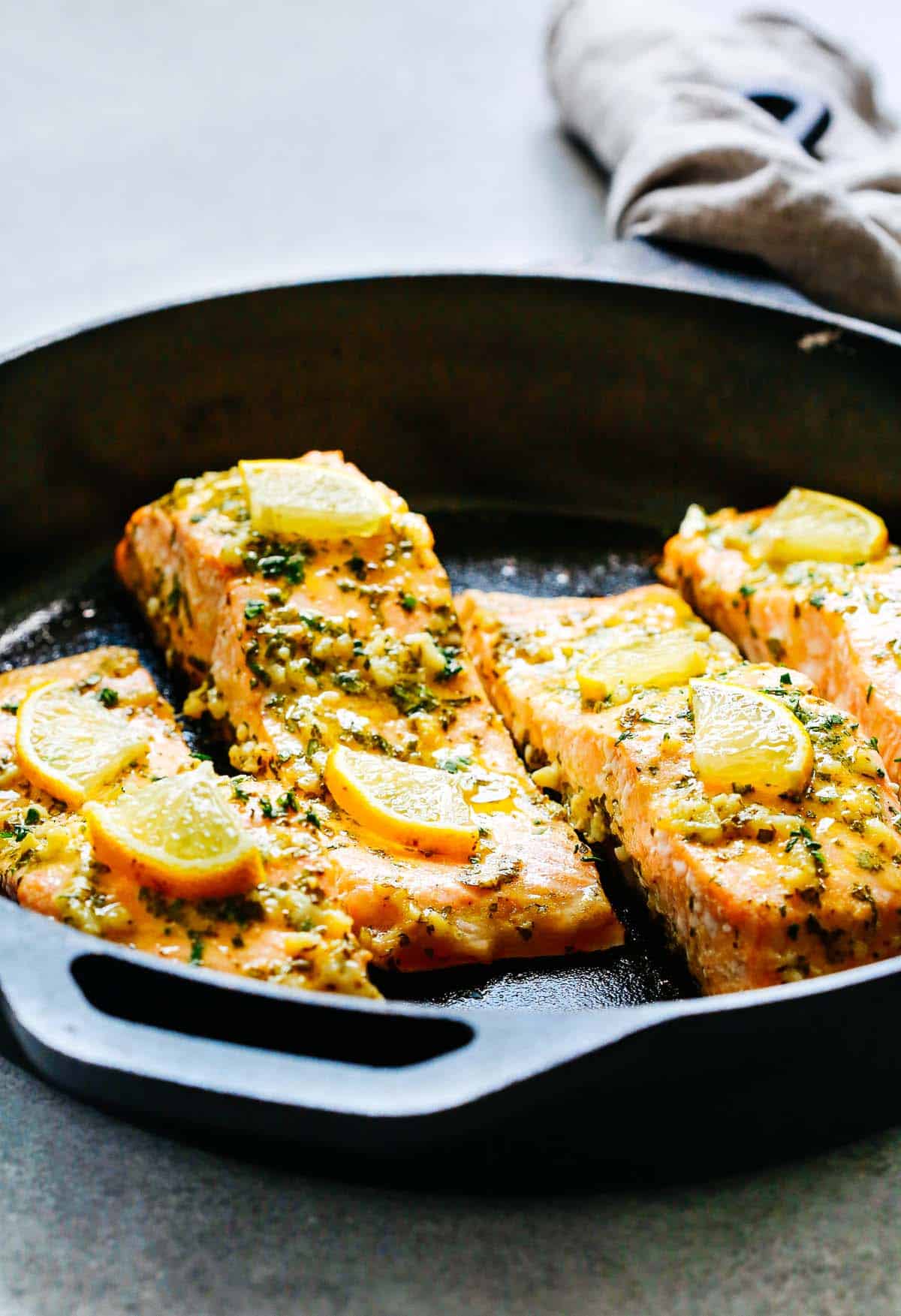
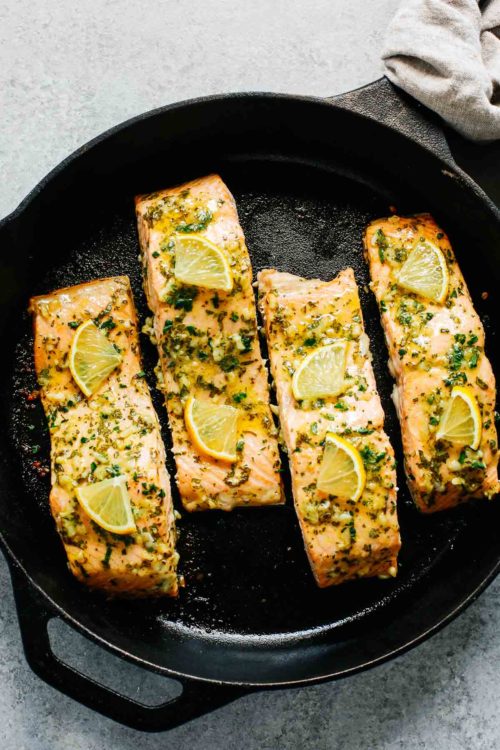
Dijon mustard salmon is my go-to answer for busy weeknights when I want something that tastes like more effort than it actually is. A tangy mustard, garlic, and lemon sauce goes straight over the salmon in one cast iron skillet, no baking sheet, no parchment, no foil packet to fuss with. It bakes hot and fast, and dinner is on the table in 15 minutes.


Olivia’s Personal Note
I make some version of baked salmon at least once a week, and this Dijon mustard version is the one I come back to most, mostly because there’s no extra pan to clean. Everything happens in the cast iron skillet the salmon bakes in, so mixing bowl aside, cleanup is fast too.
This is one of those recipes I lean on when it’s a school night and Pierre gets home late, since it doesn’t need any attention once it’s in the oven. While it bakes, I usually get a tray of Easy Roasted Asparagus going on the rack below, and the whole dinner is done in the same 15 minutes.
If your family likes the mustard and lemon combination here, my Honey Garlic Salmon is another 15-minute salmon dinner worth adding to the rotation. It’s sweeter and stickier, good for nights when Thomas wants something less tangy.
All ingredients and their amounts are listed in the recipe card at the bottom of this post.
Salmon Fillets: I recommend fillets with the skin still on. Before anything else, run your fingers over the flesh to feel for pin bones and pull out any you find with tweezers, they’re easy to miss but unpleasant to bite into.
Dijon Mustard: This is the ingredient the whole recipe is built around, so don’t substitute yellow mustard here. It won’t give you the same sharp, slightly winey flavor. I use just 1/2 tablespoon for 4 fillets.
Pro Tip: if you taste the raw sauce and think it’s too strong, don’t worry, the mustard mellows considerably once it bakes onto the fish.
Fresh Lemon Juice: I always use freshly squeezed here rather than bottled. Bottled lemon juice tends to taste flat and slightly bitter once baked, and since this sauce only has a handful of ingredients, the freshness of each one matters more than it would in a recipe with fifteen components.
Olive Oil: This keeps the sauce from being too thick to spread and helps the fish stay moist as it bakes. I’ve made this with avocado oil in place of the olive oil a couple of times when that’s what I had open, and it works just as well since it’s a fairly neutral swap.
I also love using this same tangy mustard base on chicken. My Easy Dijon Chicken Thighs use a similar sauce if you want to double down on the flavor for another night that week.
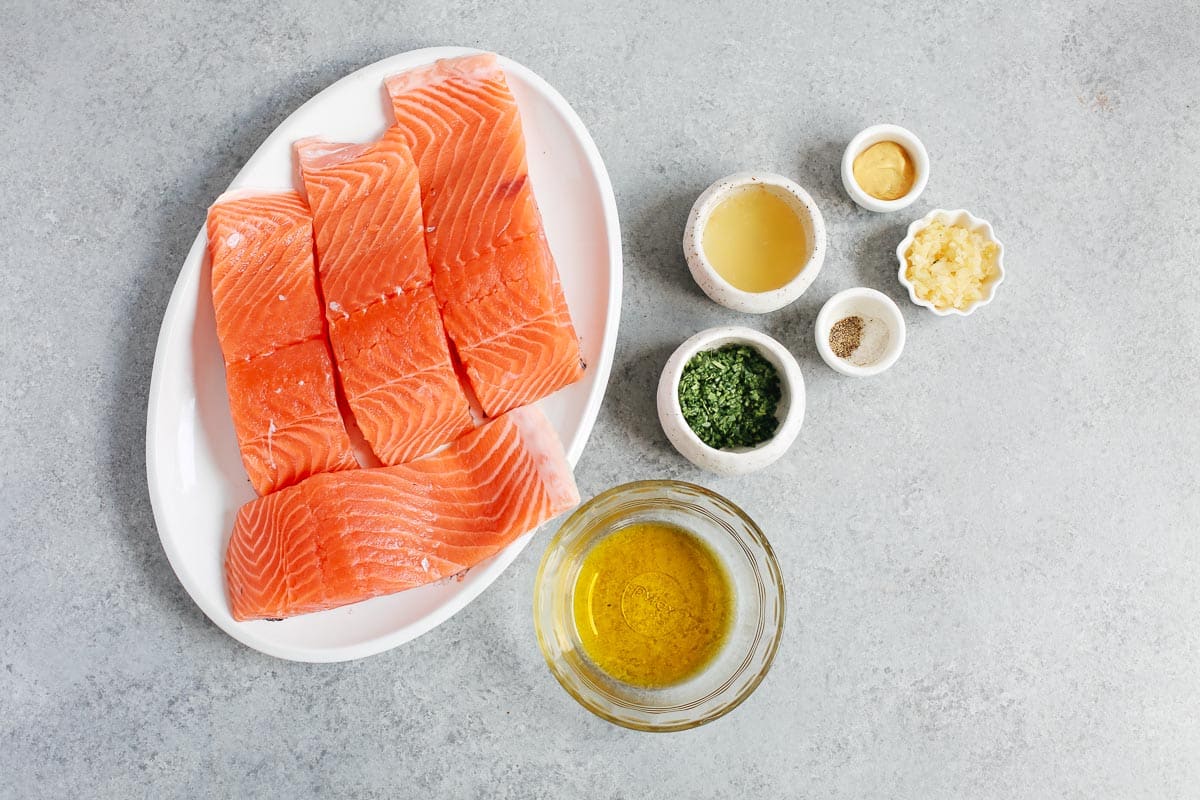
A quick note before you start: preheat your oven to 450°F, and make sure your salmon fillets are patted completely dry with a paper towel. A dry surface is what gives you a better sear and keeps the sauce from turning watery once it hits the hot pan.
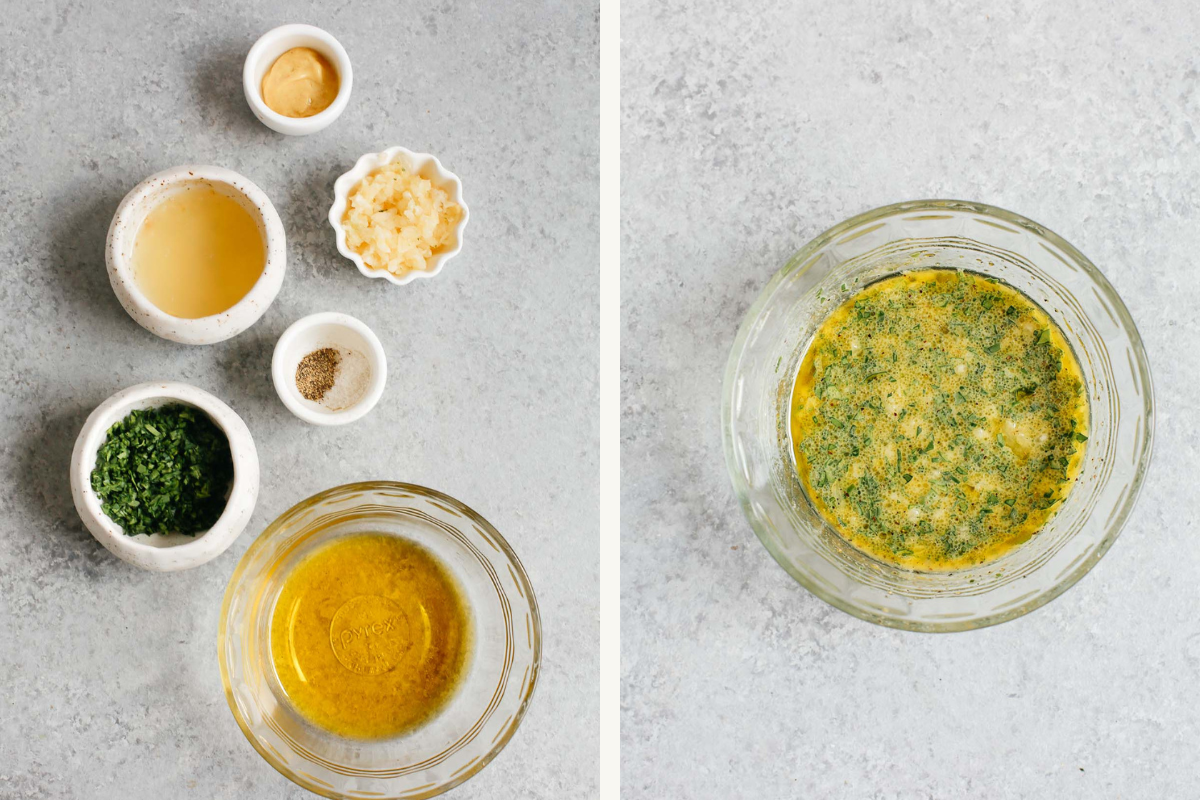
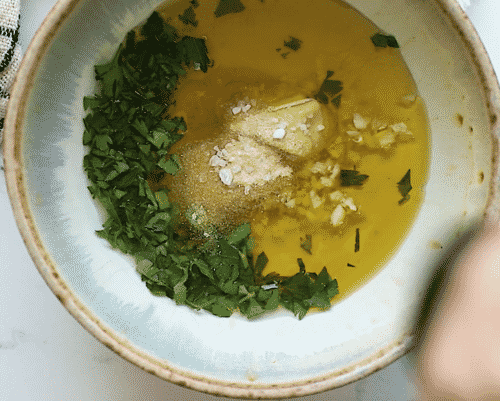
Mix the sauce: In a small bowl, stir together the Dijon mustard, olive oil, lemon juice, garlic, onion powder, parsley, salt, and pepper until fully combined. Doing this first means the sauce is ready to go the moment the salmon is in the skillet, which matters since you want to get the fish into the hot oven quickly.
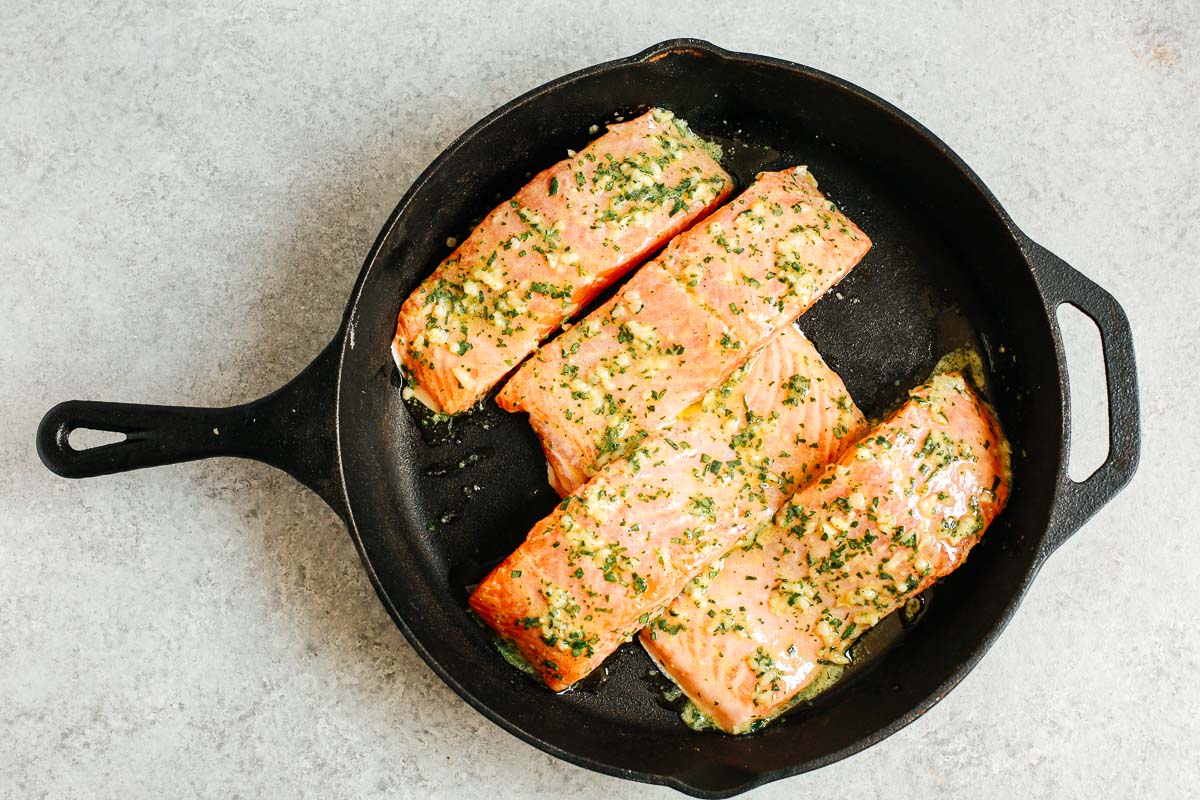
Arrange the salmon skin-side down: Place the fillets directly in a cold cast iron skillet, skin side down, without overlapping. Keeping the skin against the pan protects the delicate flesh from scorching and makes the fillets much easier to lift out later.
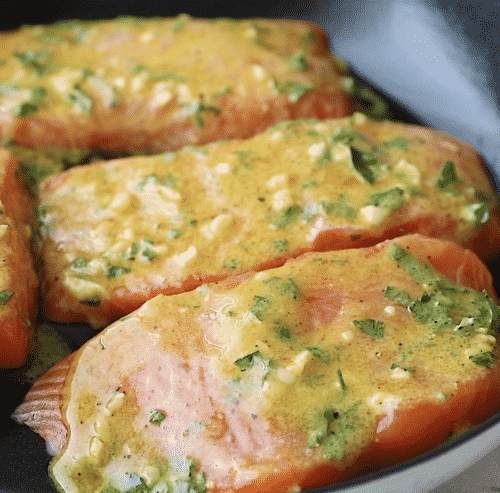
Coat generously: Spoon the mustard mixture over the top and sides of each fillet. Don’t worry about being neat here, the more surface area that’s coated, the more flavor makes it into the fish as it bakes.
Bake until just cooked through: Bake at 450°F for about 10 minutes, though thicker fillets may need a couple minutes more. Salmon is done when it flakes easily with a fork and reaches an internal temperature of 145°F at the thickest part. I use an instant-read thermometer rather than relying on color alone, since color can be deceiving depending on how the sauce browns.
Rest, garnish, and serve: Let the salmon sit for a minute or two once it’s out of the oven, this lets the juices settle back into the fish instead of running out onto the plate. Top with fresh lemon slices before serving.
Olivia’s Recipe Tips
Let the salmon sit at room temperature for 10 minutes before baking. Cold fish straight from the fridge cooks unevenly, the outside can be done while the center is still underdone. Ten minutes on the counter is enough to even that out without any food safety concern.
No cast iron skillet? Use an oven-safe non-stick skillet or a rimmed baking sheet instead. Either one goes straight into the oven with the raw, sauced salmon, there’s no stovetop step involved at any point in this recipe.
Use a thin metal spatula to serve. Slide it between the flesh and the skin to lift each portion off cleanly, leaving the skin behind in the pan if you’d rather not eat it.

Dijon Mustard Salmon Recipe
Video
Ingredients
- 4 medium salmon fillets
- 1 tbsp fresh parsley chopped
- 1 tbsp lemon juice
- 4 tbsp olive oil
- 2 garlic cloves minced
- 1/2 tbsp Dijon mustard
- ¼ teaspoon onion powder
- Salt and black pepper to taste
- Slices of lemon for garnishing
Instructions
- Preheat the oven at 450F. In a small bowl add all the ingredients (except the salmon and the slices of lemon) and mix everything well until combined.

- Place the 4 salmon filets (skin side down) on a cast iron skillet. Add the Dijon mixture on top and sides of the salmon filets.

- Bake at 450°F for 10 minutes (the time will depend on the size of your salmon fillet). Garnish with lemon on top. Serve with cauliflower rice, green beans, roasted asparagus or mashed cauliflower.

Notes
Nutrition
Nutrition information is automatically calculated, so should only be used as an approximation.
Did You Make This?
Follow @primaverakitchen on Instagram, snap a photo, and tag it #primaverakitchen. We’d love to see your recreation.








We liked this a lot. I usually like maple or honey with dijon mustard but somehow following this I liked this just as well, without any “sweet” added. Didn’t use olive oil and it was fine without it. Wonderful would make often. Did sheet pan broccoli, carrots, peppers and roasted chickpeas with it. Nothing left!
Wow that’s awesome. Love your dish dish! Great idea!
Delicious! Yummy 🙂 Quick, simple and very tasty! thanks a lot!
Awesome!
This turned out really well. I didn’t have fresh garlic so I used granulated. Thank you for the recipe!
Awesome. Happy ou liked it!
I love it! I use it whenever we have salmon-which is every week!
How awesome! Happy to hear that 😉
Why is it advised to use a non-stick skillet, if you do not have cast iron skillet?, If you’re going to transfer it to a baking sheet to bake in the oven? Did I miss a step? Thanks!
Thanks much, Olivia, this was great! Will definitely make it again. I put some Good Seasonings Italian on the salmon for 2 hours before baking it. Juicy and delicious!
Awesome! Happy to hear that 😉