
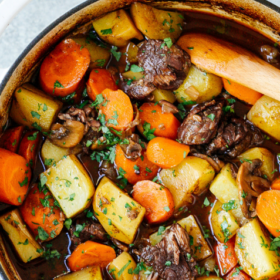
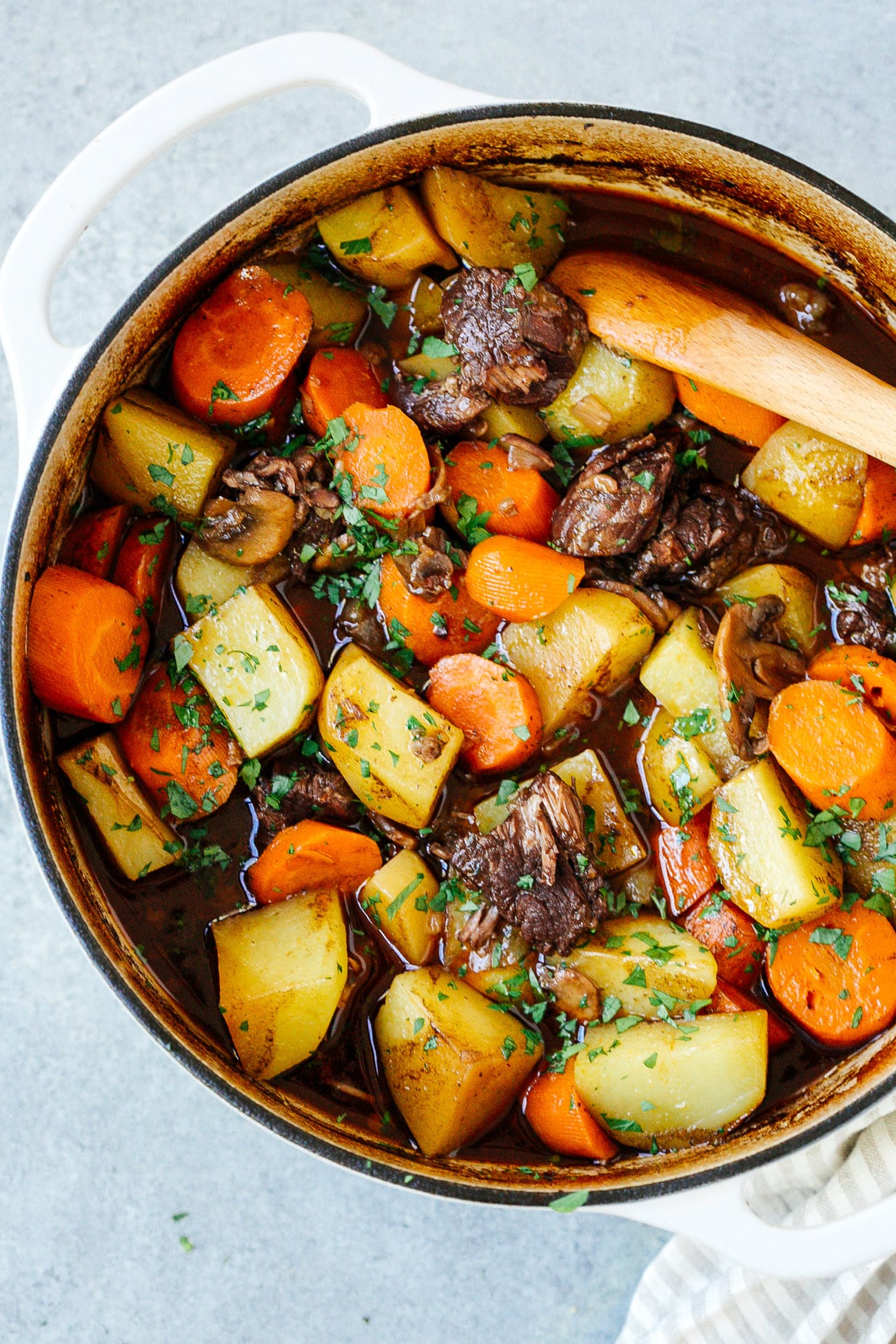
This Dutch oven beef stew starts with a hard sear on the beef, then a slow, low braise that turns tough chuck into something fall-apart tender in about 2 hours 50 minutes, most of it hands off. Everything, the beef, onions, carrots, potatoes, garlic, and herbs, cooks in one pot, so the broth ends up deep and savory instead of thin. It’s the kind of dinner I put in the oven and mostly forget about until my kitchen smells incredible.


This Stew Is My Winter Comfort Food Go-To
I live in Toronto, and our winters get seriously cold. When the temperature drops, I want something rich and hearty simmering away in the oven while I do anything but stand at the stove, and this stew is exactly that.
I’ve made beef stew stovetop, in the slow cooker, and in the pressure cooker, but starting it on the stove to build flavor, then finishing it low and slow in the oven, is still the method I go back to. That long, undisturbed braise gets the beef more tender than any shortcut version I’ve tested.
My favorite way to serve it is over my Mashed Potatoes, since they soak up every drop of the broth. If you like this kind of slow-braised, wine-spiked cooking, my Guinness Beef Stew with Potatoes is another one I make often once the weather turns.
Key Ingredients for Dutch Oven Beef Stew
All ingredients and their amounts are listed in the recipe card at the bottom of this post.
Well-marbled beef chuck: I always choose chuck roast because it has just the right amount of fat and connective tissue and when you cook it low and slow in a Dutch oven, that collagen melts into the broth and makes the meat fall-apart tender and full of real beefy flavor. It’s far better than lean cuts that can end up dry and tough.
Red wine (or balsamic vinegar): Adding a bit of dry red wine like Cabernet or Merlot and balsamic vinegar bring a subtle acidity that balances the richness and layers of flavor. I found that the acidity cuts through the fat and makes the whole stew taste more complex and satisfying.
Arrowroot flour: I don’t dredge the beef in flour before searing. Flour on the meat dulls the crust you’re working so hard to build, and that crust is where a lot of the stew’s flavor comes from. Instead, I whisk arrowroot with a little cold water and stir it in during the last five minutes, which thickens the broth cleanly without any chalky taste. I’ve tested this with cornstarch too, and it works just as well if that’s what you have.
Aromatics + umami boosters (onions, garlic, Worcestershire sauce): I’ve tested this stew over and over, and I can confidently say this combo is non-negotiable for flavor. Slowly cooking the onion and garlic builds that deep, savory base right from the start, and the Worcestershire sauce is my little secret weapon. You don’t taste it outright. It just adds this rich, umami depth that makes the stew taste like it’s been simmering all day, even though it hasn’t. It’s one of those small touches that makes a huge difference.
Let’s Start by Making the Beef Tender
First things first, pull the beef out of the fridge about 30 minutes before you start. Cold meat won’t sear properly. Pat the beef really well with paper towels, then season generously with salt and pepper on all sides.
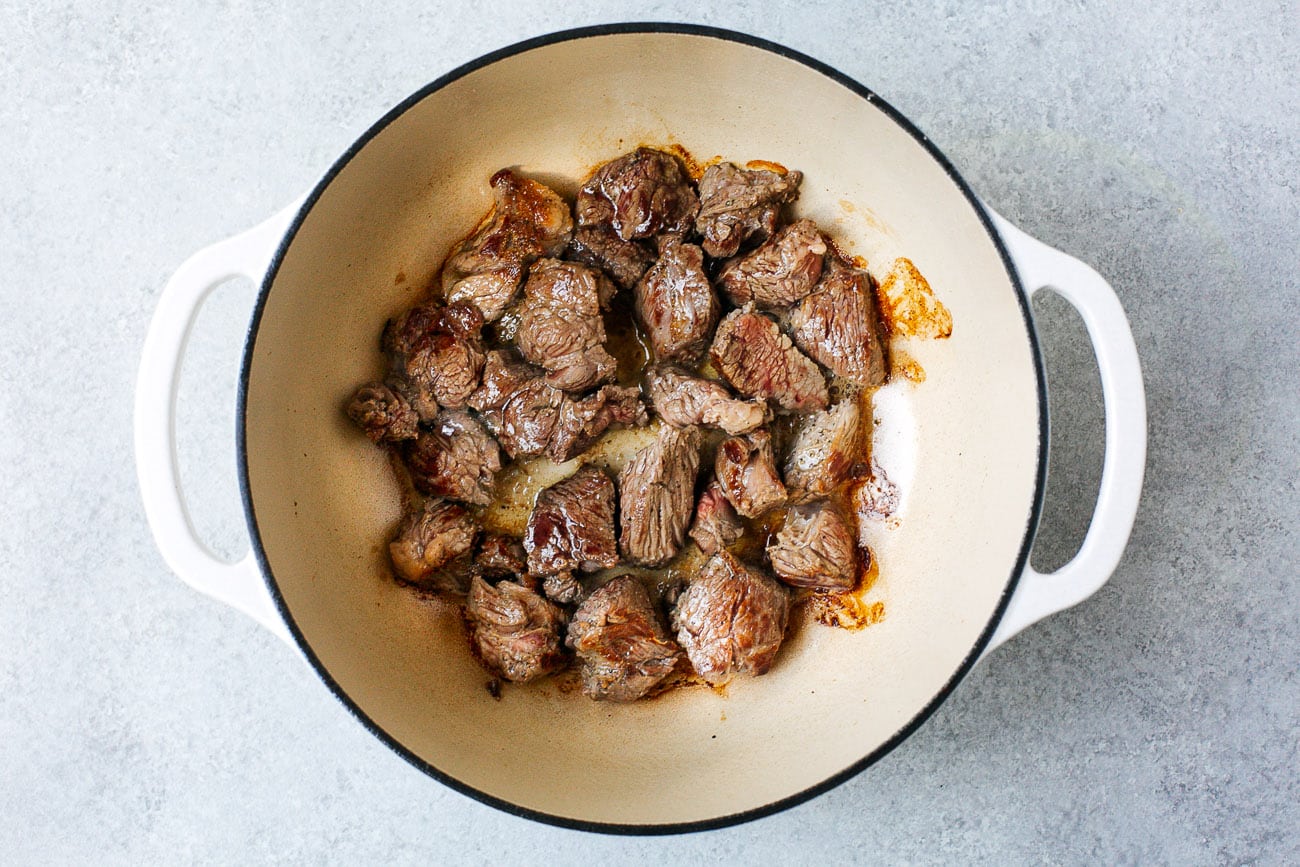
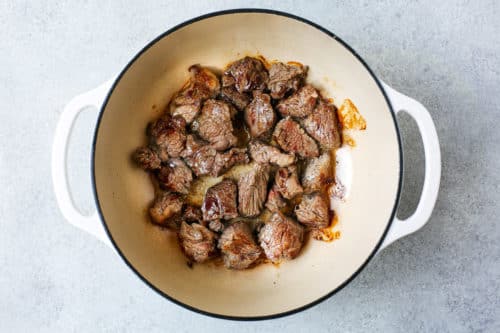
Heat your cast iron Dutch oven and add the stew meat in batches (don’t crowd the pot or it’ll steam instead of sear), turning with tongs until each piece gets a deep brown crust. Searing builds rich, deep flavor and helps the meat hold its structure, so when it slowly braises later, the beef turns perfectly tender instead of dry.
Next, Let’s Build the Flavor
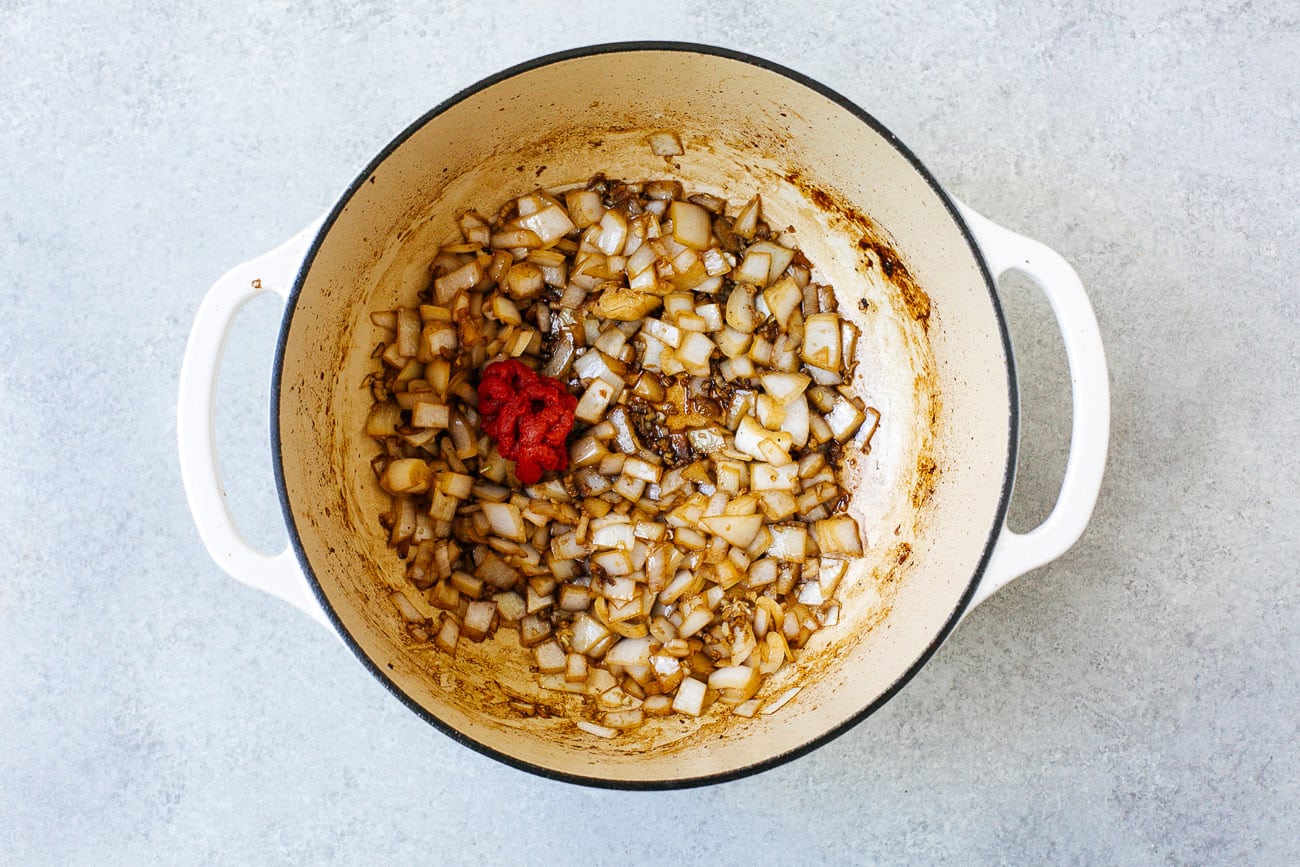
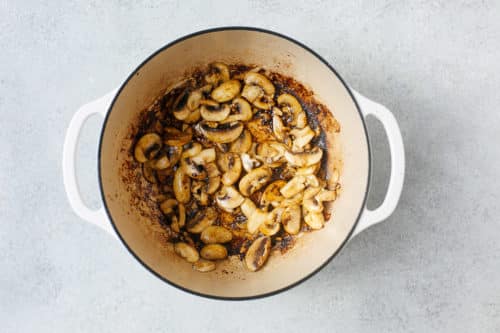
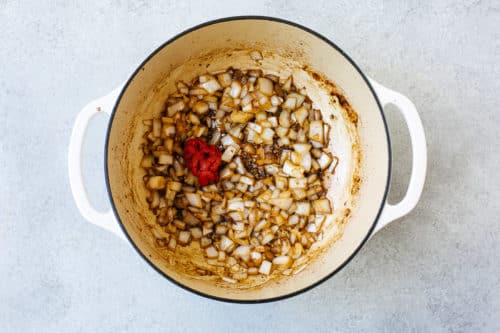
Now, without cleaning the pot (please don’t, all that flavor is gold), add a little more olive oil and toss in the mushrooms. Let them hang out until they’re golden, then scoop them out for a minute. Then, go the onions and garlic, plus a splash of balsamic and Worcestershire, and this is where you really want to scrape up all those browned bits from the bottom. That’s pure flavor right there. Stir in the tomato paste and let it cook just long enough to deepen everything, then add the mushrooms and beef back in, juices and all.
Then, Let It Slowly Braise
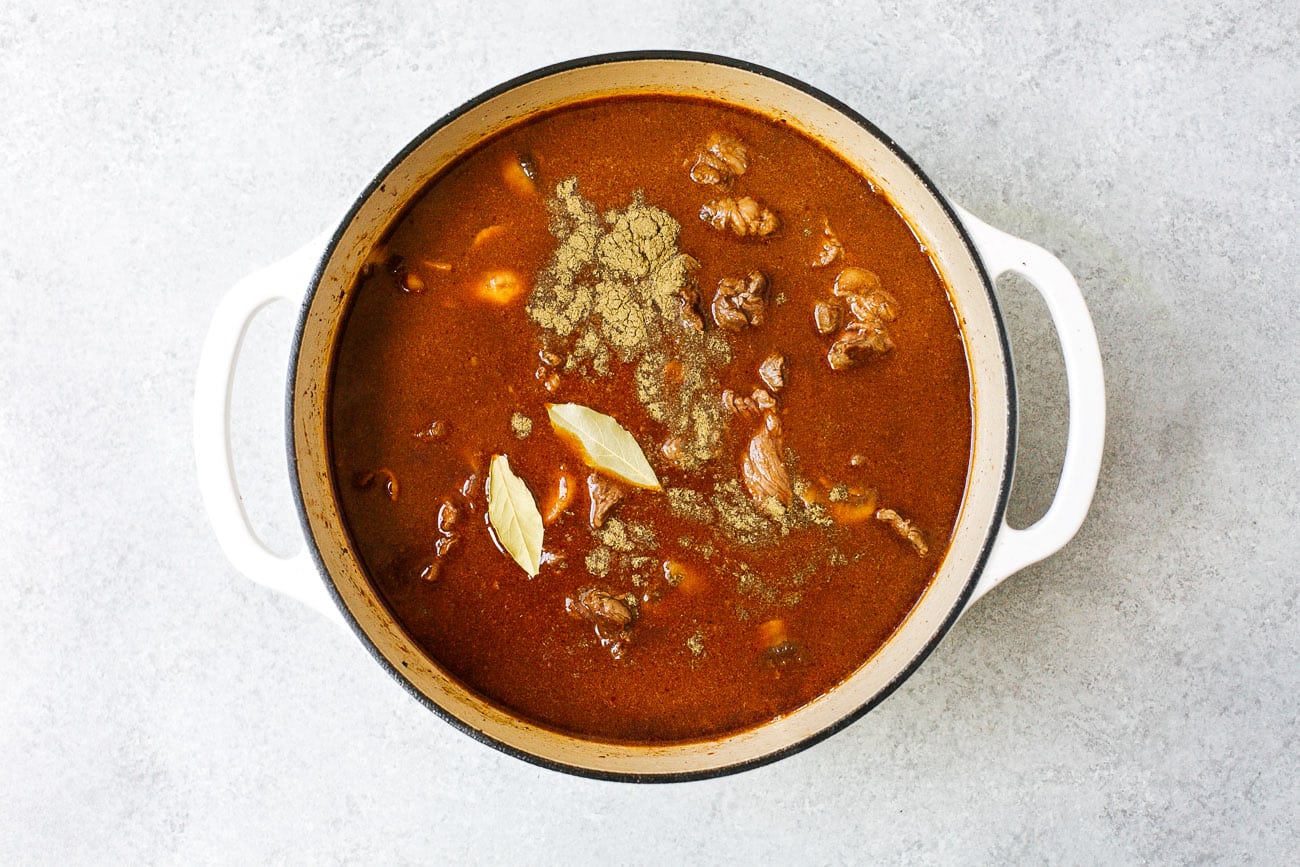
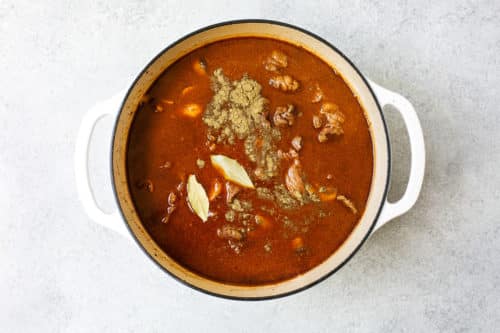
Pour in the wine, beef broth, water, thyme, and bay leaf, then give everything a good stir, making sure to scrape up any remaining browned bits from the bottom of the pot. Bring it to a gentle boil, cover with a lid, and transfer the Dutch oven to the oven. Let it braise for about 2 hours. This slow, cozy cook is what turns the beef incredibly tender and flavorful.
The Final Touches
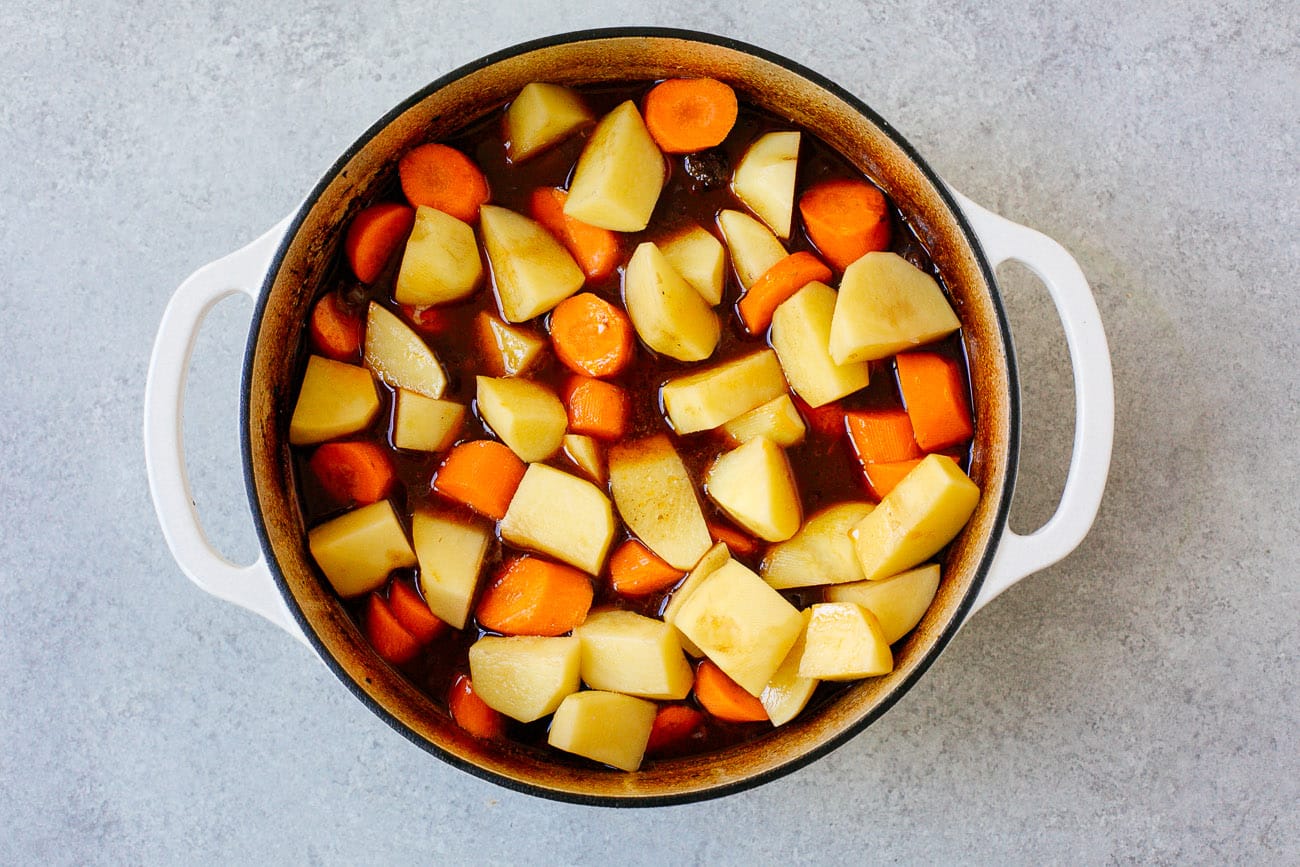
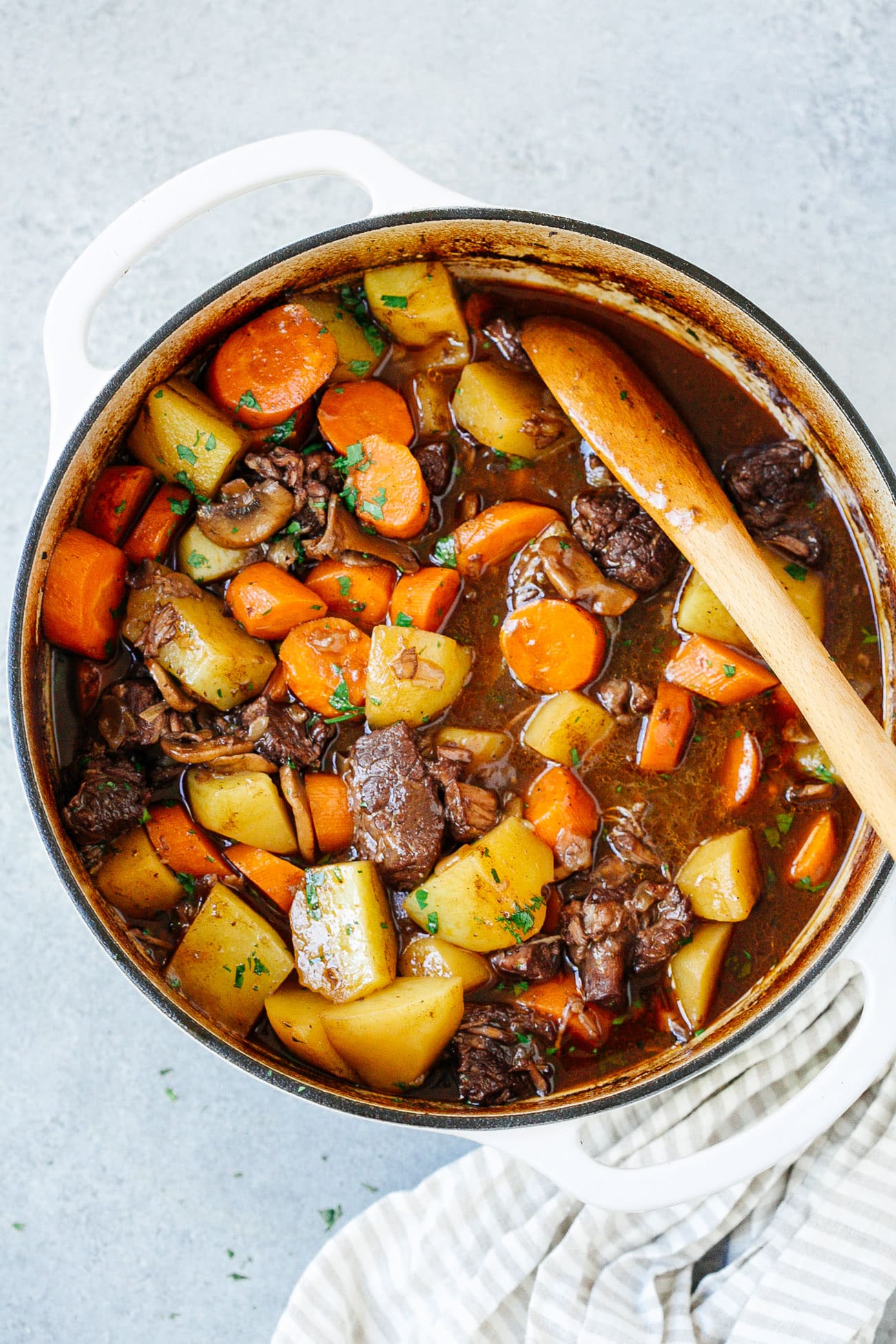
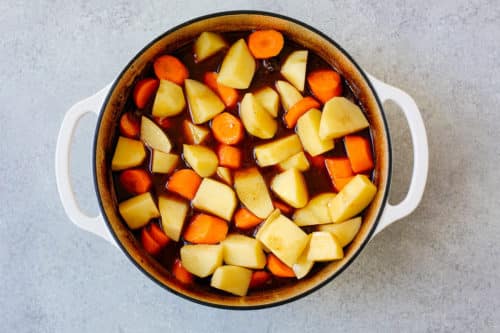
Take the pot out of the oven and add the carrots and potatoes, then cover it and pop it back into the oven for about an hour. Adding the veggies later keeps them tender without turning mushy, while the beef finishes cooking until it’s perfectly fork-tender. About 5 minutes before it’s done, mix the arrowroot with a little water and stir it into the stew to thicken the gravy. Finish by removing the bay leaf, tasting and adjusting the seasoning, and sprinkling with fresh parsley if you like.
Olivia’s Recipe Tips
Cut the beef into larger chunks than you think. Bigger pieces stay juicier and don’t dry out during the long braise.
Let the stew rest before serving. Give it 15–20 minutes off the heat. The broth thickens naturally and the flavors settle beautifully.
A splash of acid at the end makes it pop. A tiny squeeze of lemon or extra splash of balsamic right before serving brightens everything without making it tangy.
If the broth looks low after the first two hours, don’t panic. Ovens run differently, and a lid that doesn’t seal perfectly tight will lose more liquid than you’d expect. Just stir in an extra cup of beef broth when you add the carrots and potatoes so there’s enough liquid left to braise and thicken properly.

Dutch Oven Beef Stew with Red Wine
Video
Ingredients
- 3 lb boneless beef chuck well-marbled, cut into 1-1/2-inch pieces
- 2 tsp salt
- 1 tsp freshly ground black pepper
- 3 tbsp olive oil*
- 1 cup mushroom sliced
- 2 medium yellow onions chopped
- 7 cloves garlic minced
- 2 tbsp balsamic vinegar
- 1 tbsp Worcestershire
- 1 1/2 tablespoons tomato paste
- 1 cup dry red wine
- 2 cups beef broth
- 2 cups water
- 2 bay leaves
- 1/2 teaspoon ground or dried thyme
- 2 tbsp arrowroot flour
- 4 large carrots peeled and sliced into diagonal 1-inch pieces.
- 1 pound small white boiling potatoes baby Yukon, cut in half
- Fresh chopped parsley for serving (optional)
Instructions
- Preheat the oven to 350°F and set a rack in the lower middle position. Remove the beef from the fridge about 30 minutes to 1 hour before cooking. Place it on a paper towel-lined cutting board and pat them dry with paper towels.
- Sprinkle coarse salt and black pepper on all sides of the beef cubes. In a large Dutch oven, heat up 1 tablespoon of olive oil at a medium-high heat.
- Sear the meat in up to 3 batches. Use tongs to turn the meat. Cook each batch for about 3 to 5 minutes.

- Add one tablespoon of oil for each batch and avoid overcrowding the pan to prevent steaming. Transfer the browned meat to a large plate and set it aside.
- In the same pot, add more olive oil and add mushroom. Saute mushroom for about 3-5 minutes. Set aside.
- Add the onions, garlic, balsamic vinegar, and Worcestershire sauce. Cook for about 5 minutes.
- Scrape up the browned bits from the bottom of the pan, then add the tomato paste and cook for another minute.
- Bring back mushroom and the beef with its juices back to the pan. Add the wine, beef broth, water, bay leaf and thyme.
- Stir with a wooden spoon to loosen any brown bits from the bottom of the pan. Allow it to reach boiling point. Cover the pot with a lid, move it to the oven that's already heated, and let it braise for a duration of 2 hours.
- Remove the pot from the oven and add the carrots and potatoes. Cover the Dutch oven and put it back in the oven. Cook for about an hour. The vegetables should be soft, and the meat should be tender.
- 5 minutes before remove the pot from the oven, add 2 tablespoons of arrow flour in a small pot with a little water. Mix all well to combine.
- Remove the pot from the oven. And add arrow flour mixture and mix well. Fish out the bay leaf and discard.
- Adjust seasoning if necessary. Garnish with fresh parsley, if desired. Enjoy!

Notes
Nutrition
Nutrition information is automatically calculated, so should only be used as an approximation.
Did You Make This?
Follow @primaverakitchen on Instagram, snap a photo, and tag it #primaverakitchen. We’d love to see your recreation.











So I just pulled the dutch oven out of the oven after 2 hours and was surprised to find that all the liquid has absorbed! Hmmm, what would you suggest? It’s time to add the carrots and potatoes, but there’s no liquid to thicken with the arrowroot. Maybe just add more beef broth?
So here’s what I did:
I added a quart of beef broth, a little more wine, and finished it off on the stove until the veggies were tender. I also added more potatoes, carrots, and some celery to up the vegetables in the dish. It was delicious- very flavorful!
You can add more beef broth or reduce the temperature you were cooking/baking.
It was so good… I recommend
Awesome!
Very tasty recipe
Happy you liked it!
Best recipe ever!
Thank you! You’re the best!
This was amazing. Just got an enameled dutch oven a couple of weeks ago so tried this today. I’ve made numerous beef stew recipes but have never had the beef come out so very tender. I did add 2 more cups of beef broth when adding the potatoes and carrots and cooked for probably 1.5 hours longer total after adding. Did cook at 325 instead of 350. This will be my go to beef stew recipe from now on. Thanks.
That’s so amazing. I’m so glad you like this recipe. Thanks for stopping by.
This was extremely delicious. As I had recently purchased an enameled cast iron Dutch oven I was looking for recipes. I’ve done beef stews on the stove and in the crockpot but have never had the beef come out as absolutely tender as this did. I may have to fix it again for Christmas Eve!
Wow your comment made my day. So glad you liked this recipe. Thanks for stopping by.
Can I use cornstarch or a diff
Flour instead of arrowroot? And is there anything I can substitute for the balsamic vinegar?
Yes you can replace it for cornstarch and you can use red wine instead of balsamic vinegar.
The best substitute for balsamic vinegar is to mix 1 TBS red wine vinegar with 2 tsp maple syrup. You can use honey or sugar if you don’t have maple syrup. I found this on the internet when making this stew when I didn’t have any balsamic vinegar on hand.
This is a family favorite!
Happy to hear that!
The stew is ready for the oven, but why can’t I just finish cooking this on top of the dtove?
yes you absolutely can.
Very tasty. All the right ingredient comes together. Cool damp day, perfect meal.
So happy to hear that!
I made this stew EXACTLY according to this recipe (which is unusual for me, I usually improvise!), and then was so happy that I did – my husband ate it for two days, then pronounced that it was the best beef stew he had ever had!
Score! I am now going to go through all your other stew recipes. I am so happy to have found you! Thanks for sharing!
This made me smile! ❤️ I’m so happy you followed the recipe exactly—even though you usually improvise—and that it was such a hit! Your husband calling it the best beef stew he’s ever had is the BEST compliment. 😍 I hope you find lots more recipes you love, and thank you so much for being here and trying my recipes! 😊